
Case Title – MOHAMMADHANIF MOHAMMADIBRAHIM PATEL & ORS. vs. PALLAVIBEN RAJENDRA KUMAR PATEL & ORS.
Citation – 2025 INSC 1355
Date – 18.11.2025
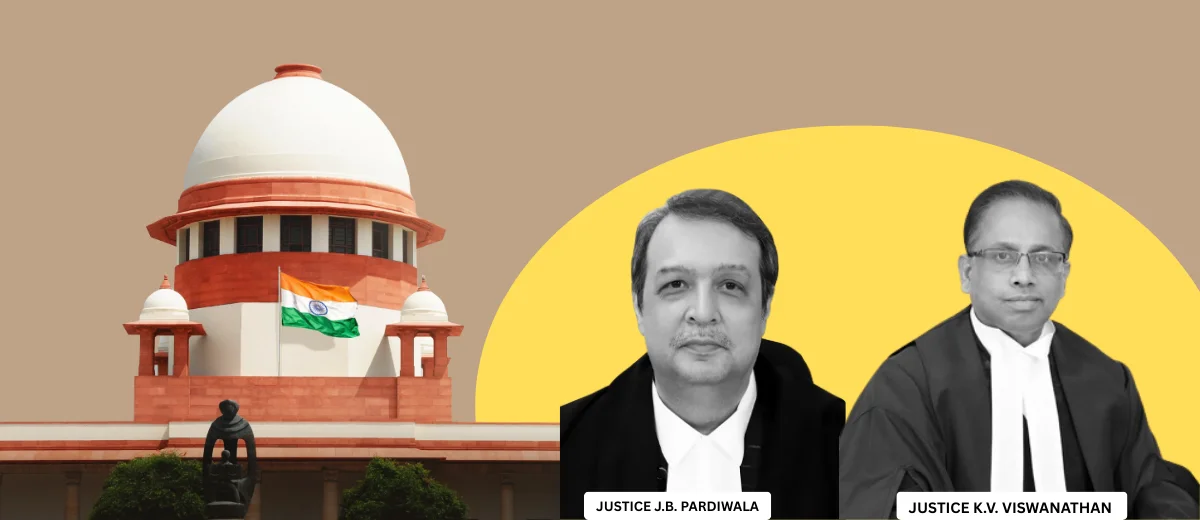
Hon’ble Supreme Court Bench – JUSTICE J.B.PARDIWALA & JUSTICE K.V. VISWANATHAN
The Hon’ble Supreme Court has clarified that an Appellate Court can grant interim relief (like a status quo order) even if the original suit has been dismissed by the trial court.
- The Hon’ble Court said that an appeal is a continuation of the original suit, so the appellate court has the same powers as the trial court to protect a party’s rights. The case arose because the Hon’ble Gujarat High Court refused to grant a status quo order, saying that since the suit was dismissed, the plaintiff (now the appellant) had already lost and could not get any interim protection.
- The Hon’ble Supreme Court disagreed, stating that the appellate court must still consider whether the appellant has a prima facie case, whether there will be irreparable injury, and what the balance of convenience is.
- The Hon’ble Court highlighted that in specific performance cases involving immovable property, interim protection is often necessary to prevent the subject property from being changed or transferred before the appeal is decided.
- The lower courts wrongly relied on Order XLI Rule 5 of the CPC, which deals only with staying the execution of a decree. Since the suit was dismissed, no decree existed, so this rule did not apply at all. The Hon’ble Supreme Court said it is incorrect in law to assume that “once the suit is dismissed, no interim relief can ever be granted.” It emphasized that the appellate court must independently assess the interim relief request based on legal principles and not simply reject it because the trial court dismissed the suit.
- Finally, the Hon’ble Supreme Court set aside the Hon’ble Gujarat High Court’s decision and allowed the appeal, restoring the possibility of interim protection for the appellant.






 > Mon - Sat, 9:00 AM – 7:30 PM