
Case Title : M.K. Ranjitsinh & Others vs Union of India & Others
Citation : 2025 INSC 1472
Date : 19.12.2025
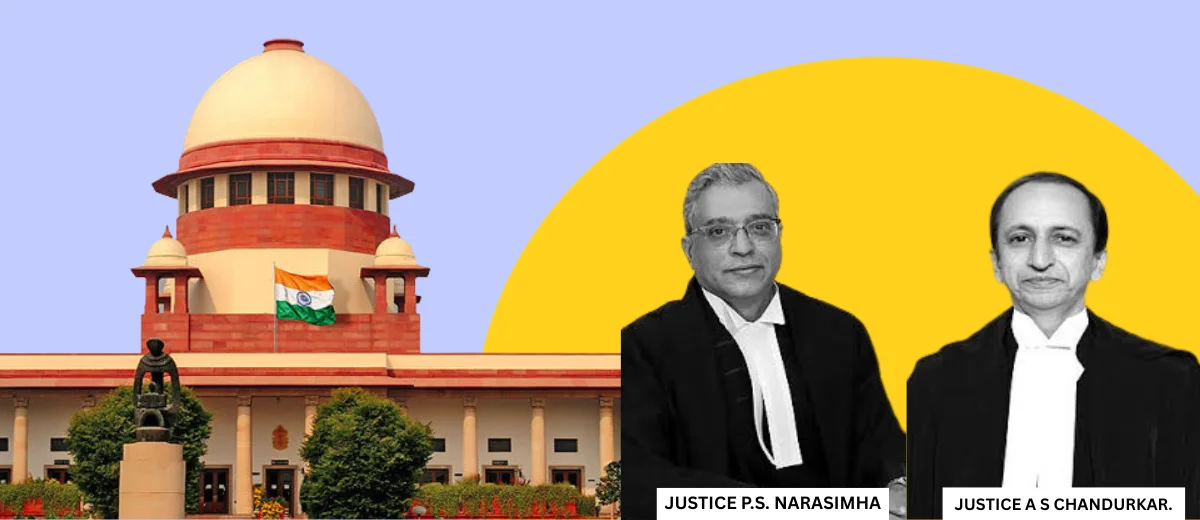
Hon’ble Bench Of Supreme Court – Justice PS Narasimha and Justice Atul S. Chandurkar.
In the landmark judgment of M.K. Ranjitsinh v. Union of India (December 19, 2025), the Supreme Court provided a transformative perspective on Corporate Social Responsibility (CSR), elevating it to include Corporate Environmental Responsibility (CER) as a mandatory legal and ethical framework. Furthermore, the Court said :
- Under Section 166(2) of the Companies Act, directors are legally bound to act in the best interests of the community and the environment. This means that if a business activity threatens an endangered species, the board of directors has a “fiduciary” obligation to intervene.
- It used a powerful metaphor, describing renewable energy companies as “guests in the home” of the Great Indian Bustard. As guests, they have a moral and legal duty not to destroy the “abode” of their hosts.
- The Court argued that the word “community” in CSR laws is not restricted to humans. In a modern legal sense, the community includes the local flora, fauna, and the ecological health of the region. Therefore, spending money to underground power lines or protect bird habitats is not “diverting” social funds—it is protecting the very foundation of the community’s future.
- The court also directed that National CAMPA funds and corporate CSR should be integrated to fund high-cost conservation projects, such as captive breeding and habitat restoration.




 > Mon - Sat, 9:00 AM – 7:30 PM