Case Name: P. SURESH VS. D. KALAIVANI & ORS.
Petition Number: Civil Appeal No. 739/2026 arising out of S.L.P. (Civil) No. 20423/2025
Citation: 2026 INSC 121
Date of Judgement: 03.02.2026
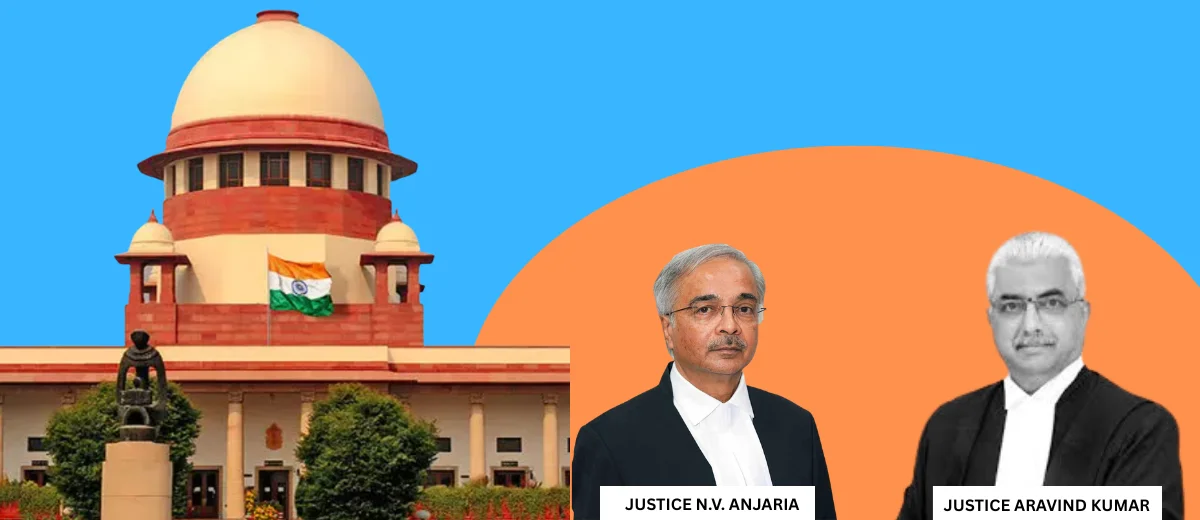
Coram: JUSTICE ARAVIND KUMAR & JUSTICE N.V. ANJARIA.
Background and Facts of the Case:
The plaintiff filed a suit for permanent injunction before the District Munsif Court, Tambaram, claiming possession over a certain property based on a 1975 sale deed executed in favour of his mother. The defendants disputed the sale deed and alleged that it was forged. They also claimed ownership themselves. Instead of filing an application under Order VII Rule 11 of CPC before the trial court for rejection of the plaint, the defendants approached the Madras High Court under Article 227. The High Court exercised its supervisory powers and struck off the plaint, following which the present appeal was filed.
Issue for Consideration:
- Whether the High Court can exercise its supervisory jurisdiction under Article 227 to strike off a plaint when a specific statutory remedy exists under Order VII Rule 11 of CPC?
Arguments of the Parties:
The petitioner argued that the powers given under Article 227 are supervisory and they must be exercised sparingly. When a specific remedy in the form of Order VII Rule 11 exists under CPC, the High Court cannot bypass it.
The respondents argued that the powers given under Article 227 are wide. Order VI Rule 16 of CPC was also referred to, which permits the court to strike off pleadings. The High Court rightly struck off a fraudulent suit.
Judgement and Analysis:
The Supreme Court held that Article 227 is supervisory in nature, and not appellate. It cannot be used to correct mere errors. When a specific remedy such as Order VII Rule 11 exists in CPC for the rejection of a plaint, the High Court cannot bypass that. The Court further clarified that Order VI Rule 16 of CPC permits striking out only the objectionable portions of pleadings and this provision cannot be used to justify striking off an entire plaint. The High Court had also entered into factual findings such as examining allegations of forgery, which comes under the purview of the trial court. Civil matters involving title disputes require evidence, not the supervisory intervention of the High Court.
The High Court committed a manifest error in exercising its powers under Article 227. As a result, the impugned judgment and order of the High Court was set aside. The suit was restored to the trial court and parties were directed to appear before the trial court for further proceedings. The defendants were granted liberty to file an application under Order VII Rule 11 of CPC.
Conclusion:
When a specific statutory remedy is available, the High Court cannot exercise Article 227 to strike off an entire plaint. Article 227 is supervisory in nature, and it cannot be used to replace statutory remedies.


 > Mon - Sat, 9:00 AM – 7:30 PM