Case Name: KUSHAGRA VIJAY AGRAWAL V. UNION OF INDIA & ORS.
Petition No.: Writ Petition (L) No. 16225 of 2026
Date of Judgment: 30.06.2026
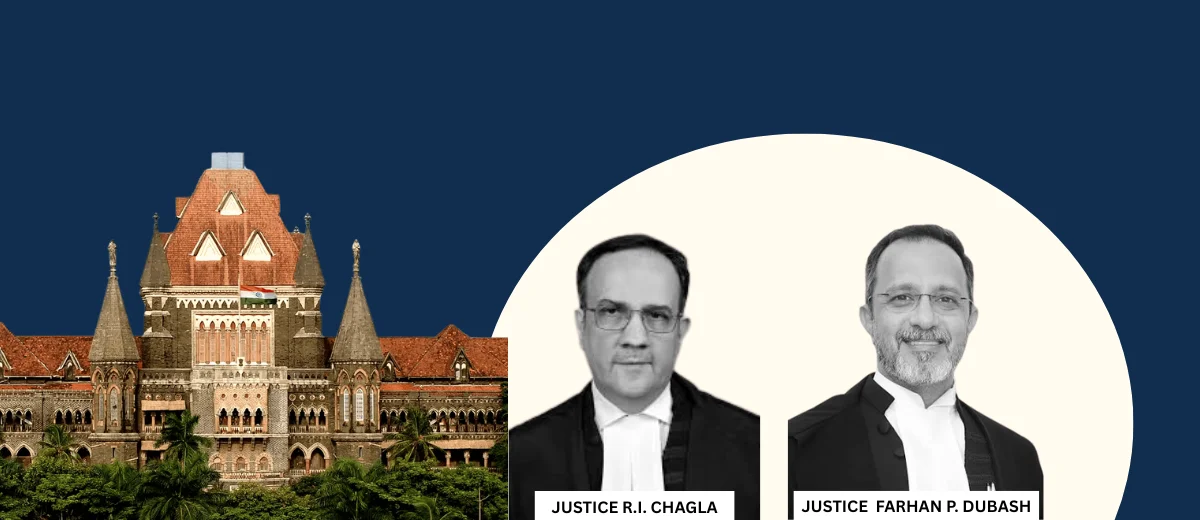
Coram: Hon’ble Mr. Justice R.I. Chagla & Hon’ble Mr. Justice Farhan P. Dubash
Relevant Statutes & Provisions: Article 226 of the Constitution of India, Rule 12, Bar Council of India Rules, Rules of Legal Education, 2008, National Education Policy, 2020, UGC Regulations, 2003, NMIMS Attendance Policy, 2026
INTRODUCTION
The Bombay High Court considered an important question concerning the extent of judicial interference in academic decisions relating to attendance requirements in legal education. The petitioner, a final-year law student of NMIMS, challenged the decision of the University debarring him from appearing in the Semester X examinations due to shortage of attendance. The case required the Court to examine the scope of Article 226, the binding nature of judgments delivered by another High Court, and the balance between judicial review and institutional autonomy in academic matters.
FACTS
The petitioner, Kushagra Vijay Agrawal, was a final-semester B.B.A. LL.B. student at Kirit P. Mehta School of Law, NMIMS University. During Semester X, he contracted chicken pox and remained absent from college from 4th February to 17th February 2026 on medical advice. He claimed that if this period of absence were regularised as medical leave, he would satisfy the minimum attendance requirement prescribed under the attendance policy of University. He also relied upon the fact that he had been undergoing an internship during part of the semester and requested that the internship period also be considered while calculating attendance.
However, the University pointed out that the petitioner had not followed the prescribed procedure for seeking medical leave. The required medical documents were submitted only after he was informed that he had been debarred from appearing in the examinations. Attendance records further revealed that he had remained absent for nearly fifty-three days during the semester, and his attendance in three subjects ranged between 53% and 62%, far below the minimum requirement of 70%. Even if the medically explained period was excluded, the petitioner still failed to satisfy the prescribed attendance norms. A Committee constituted pursuant to directions of the High Court examined his representation, granted him a personal hearing, and ultimately recommended that he should not be permitted to appear for the examinations. The Vice-Chancellor accepted the recommendation, following which the petitioner approached the Bombay High Court under Article 226.
ISSUES
- Whether the petitioner could rely on Re: Courts on its Own Motion in Re: Suicide Committed by Sushant Rohilla, Law Student of I.P. University 2025 SCC OnLine Del 7920 to claim permission to appear in the examination?
- Whether the Petitioner complied with the Attendance Policy of the University?
- Whether the University’s decision was arbitrary or violative of the principles of natural justice, warranting interference of the Court under writ jurisdiction?
ARGUMENTS BY PARTIES
The petitioner contended that the shortage of attendance resulted from circumstances beyond his control, namely his illness due to chicken pox and internship obligations. He argued that if his medical leave had been regularised, he would have fulfilled the minimum attendance requirement. Relying on Sushant Rohilla (supra), he submitted that law students should not be debarred from examinations solely due to attendance shortage. He further contended that the University had previously implemented the directions in Sushant Rohilla (supra) and therefore could not deny him similar relief.
The respondents argued that the petitioner failed to comply with the mandatory attendance requirements under Rule 12 of the Bar Council of India Rules and the University’s Attendance Policy. They submitted that he neither applied for medical leave in the prescribed manner nor produced the required medical documents within time. Even after excluding the medically explained period, his attendance remained below the prescribed minimum limit. It was further contended that Sushant Rohilla (supra) was neither binding outside the territorial jurisdiction of the Delhi High Court nor applicable after the Supreme Court prospectively stayed paragraph 249.
JUDGEMENT AND ANALYSIS
Regarding the first issue, the Court rejected the petitioner’s reliance on the Sushant Rohilla (supra) and observed that the Supreme Court, by its order dated 26th May 2026, had prospectively stayed the operation of paragraph 249 while clarifying that High Courts were free to decide pending attendance matters on their own merits. It also noted that subsequent orders of Delhi High Court such as Varsha Rani v. University of Delhi (Order dated 29th May 2026 passed in Writ Petition (C) No. 7736 of 2026) and Jahnavi v. University of Delhi (Order dated 29th May 2026 passed in Writ Petition (C) No. 7736 of 2026) were passed only after the Supreme Court’s order dated 26th May 2026, and recognised its prospective effect.
Regarding the second issue, the Court held that neither illness nor internship entitled the petitioner to relaxation of attendance. Although the petitioner had suffered from medical illness, he failed to follow the procedure prescribed under the Attendance Policy by submitting the required medical documents within time. The Court observed that procedural requirements ensure timely verification of medical claims and cannot be ignored. It further found that the petitioner’s attendance remained below the prescribed minimum even after considering the medical leave. The Court also rejected the argument that internship should be treated as attendance, holding that neither the Bar Council of India Rules nor the University’s Attendance Policy recognised such an exemption. The Court also noted that the BCI had not issued any notification overriding the existing attendance requirements.
Regarding the third issue, the Court held that there was no arbitrariness or violation of natural justice. The petitioner’s explanation, medical documents, and representation were duly considered by the Committee before the final decision. While highlighting that the issue arising in the present Writ Petition is substantially covered by the reasoning adopted by this Court in Kavya Agarwal v. University Grants Commission & Ors. 2026 : BHC – OS : 13197 – DB, the Court reiterated that courts cannot rewrite academic regulations or create exemptions from mandatory attendance requirements. It further emphasized that Article 226 should be exercised only in exceptional cases. Since no illegality, mala fides, or procedural unfairness was established, the writ petition was dismissed and the University’s decision was upheld.
CONCLUSION
The Bombay High Court dismissed the writ petition and upheld the University’s decision. It reaffirmed that courts should ordinarily refrain from interfering in academic matters unless the decision-making process is arbitrary, mala fide, discriminatory, or violative of statutory provisions or the principles of natural justice. It also clarified that the Delhi High Court’s decision in Sushant Rohilla (supra) does not confer an automatic right to appear in examinations, particularly after the Supreme Court’s prospective stay of paragraph 249.


 > Mon - Sat, 9:00 AM – 7:30 PM