Case Name: SUBEDAR MAJOR ASHOK KUMAR VERMA (RETD.) v. MINISTRY OF DEFENCE &ANR
Petition No.: Writ Petition No. 12661/2019, CM Application 51712/2019 & CM Application 14905/2021
Neutral Citation: 2026:DHC:5230-DB
Date of Judgement: 01.07.2026
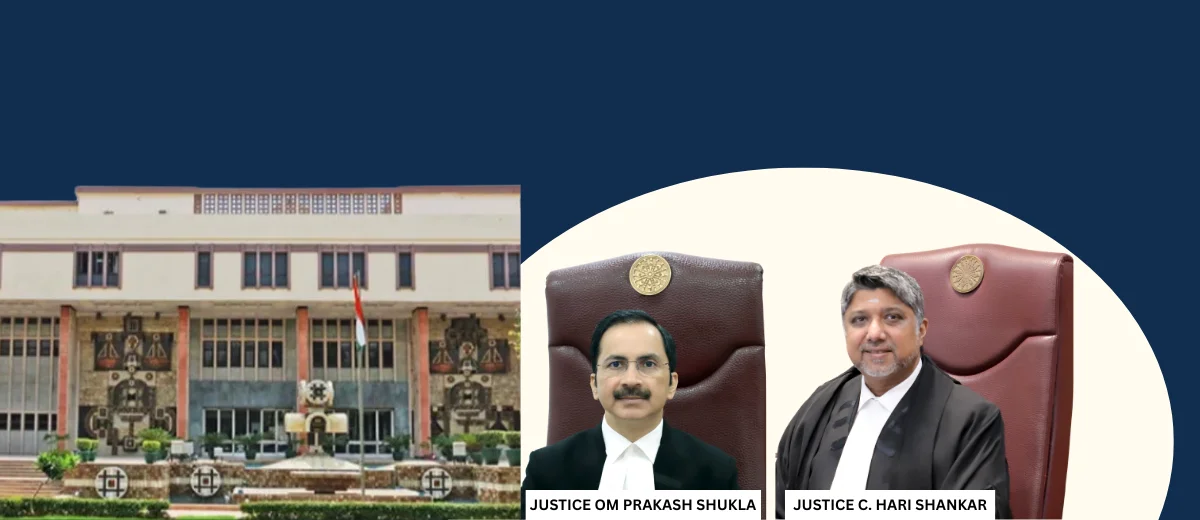
Coram: Hon’ble Mr. Justice C. Hari Shankar and Hon’ble Mr. Justice Om Prakash Shukla
Relevant Statutes & Provisions: Part III of Office Memorandum (OM) No. 34(15)/96-07M
INTRODUCTION
The present case concerns the scope of a candidate’s right to appointment after being selected in a public recruitment process and the extent to which administrative authorities may cancel such a process due to procedural irregularities. It examines whether inclusion in a select list creates an enforceable right to appointment, particularly when the appointing authority identifies defects in the recruitment procedure before issuing appointment orders.
FACTS
The Petitioner is a retired Junior Commissioned Officer of the Indian Army, who superannuated on 31.12.2016, at approximately 52 years of age. The Respondents vide notification dated 03.03.2016, invited applications for filling three (03) posts of CASO, a General Central Service Group ‘B’ Gazetted, Non-Ministerial post under the Directorate General of Quality Assurance (DGQA), Ministry of Defence (MoD) to be filled on deputation/re-employment basis. The notification specified qualifications to be strictly followed with maximum age not exceeding 56 years. Upon completion of the selection process, 3 candidates including the petitioner were selected with higher marks than the other two. However MoD returned the file stating appointment formalities were yet to be completed and thereby sought clarifications from the appointment section. Acting upon clarifications received, the MoD submitted the file for approval of the Additional Secretary.
Subsequently, it was noted that under the Recruitment Rules, the Joint Secretary (Army), was the appointing authority for the post of CASO. Since the JS (Army) had also chaired the Selection Committee, a question arose whether the same authority could both recommend and approve the selection. Thereafter, JS (Army) was concluded to be a competent authority. During the process of determination nearly a year passed. Therefore, JS (Army) preferred to start the process afresh and recruitment process under notification of 2016 was cancelled. Consequently, the petitioner approached CAT.
ISSUE
Whether inclusion in a select list creates an enforceable right to appointment, particularly when the appointing authority identifies defects in the recruitment procedure before issuing appointment orders?
Arguments by the Parties
Petitioner submitted that the Central Administrative Tribunal (CAT) erred in dismissing the O.A. in limine, without issuing notice to the Respondents. Further, it was contended that the Petitioner cannot be made to suffer for the administrative negligence of the Respondents and that fresh vacancy circular is ultra vires. The Petitioner had appeared in the interview in good faith, and the entire selection process had been duly completed. Reliance was placed on S.I. Kapoor v. Jagmohan (1981) 1 SCC 622 to contend that procedural lapses or omissions on the part of the State cannot be foisted upon an aspirant who has fulfilled all requirements.
Respondent submitted that once the recruitment process was cancelled, the entire selection process, including any merit list prepared thereunder, ceased to have any legal effect. No candidate, including the Petitioner, can claim any right arising from a process that has been lawfully annulled. It was also emphasized that a cancellation notice was duly published, thereby ensuring transparency and providing public notice of the decision.
JUDGEMENT AND ANALYSIS
The Court relied on the judgement of the Supreme Court in the case of Shankarsan Dash v. Union of India (1991) 3 SCC 47 wherein it was held that inclusion in a select list does not confer any indefeasible right to appointment, and the State is not bound to fill the vacancies. The mere inclusion of a candidate in a select list does not create a right to be appointed. The court recognized that appointment can never be claimed as a matter of right and must conform to the constitutional mandate of equality and the applicable recruitment rules. An appointment can only be made in accordance with the statutory provisions governing recruitment and the applicable legal framework.
The court categorically observed that the absence of a formal appointment order renders the claim of the Petitioner legally untenable. Relying on State of Haryana v. Subhash Chandra Marwaha (1974) 3SCC 220 the Court reiterated that the State may decide not to proceed with the prepared list for valid reasons including administrative or policy reasons, since there is no boundation on the state to carry on the selection process to its logical end. This principle was again reiterated in the case of State of Assam v. Arabinda Rabha 2025 SCC OnLine SC 523 confirming that the government has discretion to cancel a recruitment process with a bona fide view that cancellation is necessary to ensure fairness and integrity in public employment.
Applying the above principles on facts of the present case, the Court analyzed that the recruitment process, initiated in March 2016, had remained unresolved for a prolonged period, and such a delay can legitimately justify the reconsideration of the process itself. The Court observed that the materials on record reveal that the recruitment process remained pending for a substantial period owing to administrative uncertainty concerning the identification of the competent authority for approval of the Selection Committee’s recommendations.
The Court further noted that the Respondents did not abandon the recruitment process altogether. This decision cannot be deemed arbitrary or biased since the selection committee possesses the authority to cancel the selection process, it acted in bona fide manner evident from culmination of facts as emphasized above and there the decision was not tainted with mala fide intentions. The issuance of the fresh notification reflects the Respondents’ bonafide intention to proceed with the recruitment process in a fair and transparent manner, in accordance with the applicable rules.
The Court observed that while a candidate may have an expectation of fair consideration, such an expectation does not crystallise into an enforceable right to appointment. The Court must balance individual expectations against the larger requirement of ensuring fairness and integrity in public recruitment. Mere participation in the selection process, or even being selected, does not confer an enforceable right to appointment. The Court abstained from interfering unnecessarily by stating that the Courts are not bound to interfere with administrative decisions in the public recruitment processes.
CONCLUSION
Therefore, the Court dismissed the Petition on the observations given above and held that the impugned order of the CAT does not suffer from any illegality or perversion warranting interference. The court found discernible reasons to cancel the process and absence of mala fides or arbitrariness thus validating the administrative decision and subsequent fresh notification.



 > Mon - Sat, 9:00 AM – 7:30 PM