Case Name: SHARADA SANGHI & ORS. VS. ASHA AGARWAL & ORS
Petition Number: Civil Appeal No. 2609 of 2013
Neutral Citation: 2026 INSC 292
Date of Judgement: 25.03.2026
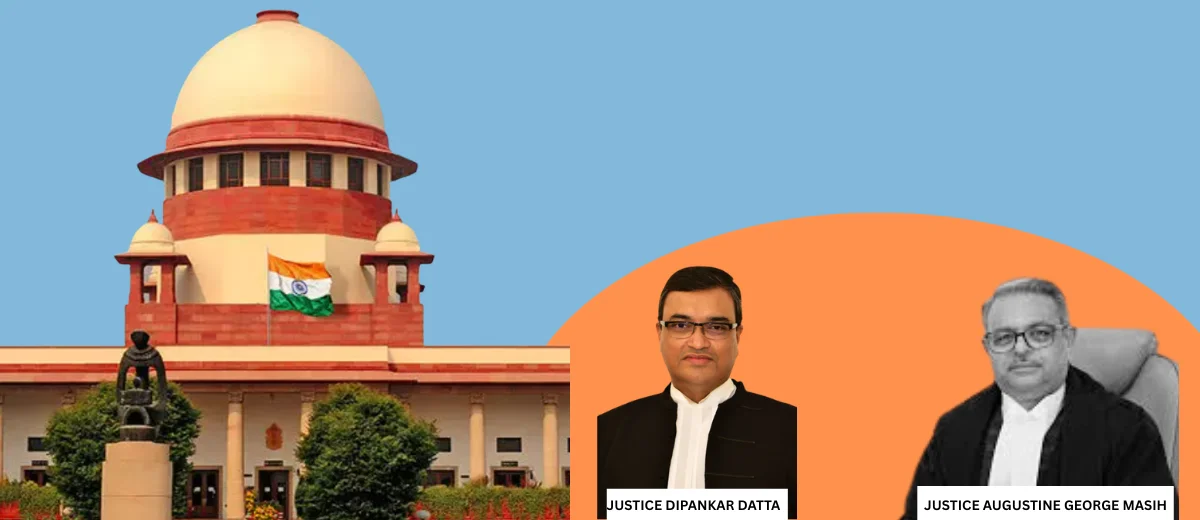
Coram: HON’BLE MR JUSTICE DIPANKAR DATTA & HON’BLE MR JUSTICE AUGUSTINE GEORGE MASIH
BACKGROUND:
This civil appeal by special leave was filed against a judgement of the High Court of Andhra Pradesh dated 21st October, 2010. The High Court dismissed the second appeal filed by the appellants and upheld the decision of the first appellate court. The appellants sought to enforce a decree for specific performance against the respondents who were not parties to the original suit. The respondents claimed independent title and possession of the property.
FACTS
The appellants filed a suit for specific performance in 1988 based on an agreement. The property belonged to a woman which was later inherited by her son. The son agreed to sell a part of the property, but failed to perform. The trial court decreed specific performance in October 1998, and directed execution of sale deed and delivery of possession. A sale deed was executed through the court in 2001. At the stage of execution, Respondents 1-3 (not parties to the original suit) resisted delivery of possession and filed an objection under Order XXI Rules 99-101 of the Code of Civil Procedure (CPC), 1908. They claimed ownership of portions of the same property through sale deeds executed in July 1990. They asserted independent title that was allegedly derived from an oral gift made by the original owner.
The appellants had previously filed two suits seeking the cancellation of the sale deeds, but both were dismissed for default due to non-appearance. The restoration applications met the same fate. The respondents asserted that they are bonafide purchasers and that the specific performance decree was not binding on them. The executing court rejected their objections, but the appellate court reversed this stating that the appellants must file a fresh suit to establish their rights against the respondents. This was affirmed by the High Court. Aggrieved by these decisions, the appellants approached the Supreme Court.
ISSUES
- Whether the petitioners have right and title over the property and have right to resist the execution proceedings in view of the dismissal of the earlier suits filed for cancellation of the sale deeds?
- Whether the petitioners are bound by the 1988 decree (specific performance suit) in favour of the respondents in which the execution proceedings are taken up?
- To what relief?
JUDGEMENT AND ANALYSIS
The Supreme Court analysed whether a decree-holder can enforce a judgement against third parties who claim independent ownership considering that when the titles were challenged earlier, the cases were ultimately abandoned by the appellants themselves. The lower courts had ruled that the appellants were barred by res judicata, a rule that prevents the same issues from being litigated twice. The Court held that dismissal of suit for default due to non-appearance does not attract the principle of res-judicata under Section 11 of CPC since the previous suits were abandoned and not “heard and adjudicated” on their merits. Such dismissal cannot be treated as a final decision. A fresh suit on the same cause of action is not barred.
However, the Court did not grant relief to the appellants because on examining their conduct, it was found that the earlier suits were dismissed due to non-appearance and even the restoration applications were not properly followed through. A party cannot raise an issue, abandon it, and then attempt to reopen it indirectly in another proceeding. This amounts to an abuse of the process of the court. The Court emphasised on the principle of nemo debet bis vexari, which means that no person should be twice vexed for one and the same cause. By allowing their earlier suits to be dismissed and failing to pursue the restoration petitions, the appellants have waived off their right to challenge the respondents’ titles.
The Court noted that under Order XXIII Rule 1, if a plaintiff abandons or withdraws a claim without the court’s permission to file one, they are barred from bringing the same claim again. The appellants were trying to use the execution of a different decree to achieve what they failed to do in the suits that were dismissed. The appellants argued that because the respondents bought the property while the 1988 suit was pending, the titles were invalid as the doctrine of lis pendens (Section 52, Transfer of Property Act) would be applicable. The court clarified that lis pendens does not make a sale void, it means the buyer is bound by the result of the suit. Since the appellants had abandoned the suits to cancel those sales, they cannot be allowed to rely on lis pendens now to bypass their previous failures.
CONCLUSION
The Supreme Court concluded that the lower courts’ technical reasonings were flawed, but their ultimate conclusion was correct. The Court made it clear that there was no res judicata but the appellants were still barred due to their conduct and abuse of process. Hence, the final takeaway is: “A litigant who set the ball rolling for decision on an issue later elects not to pursue it cannot be permitted to revive the same dispute at a later stage, particularly in collateral or execution proceedings.”