
Case Name: SUSAN K. JOHN VS. NATIONAL BOARD OF EXAMINATIONS IN MEDICAL SCIENCES AND ORS.
Petition Number: W.P.(C) No. 48652/25
Citation: 2026:KER:7594
Date of Judgement: 20.01.2026
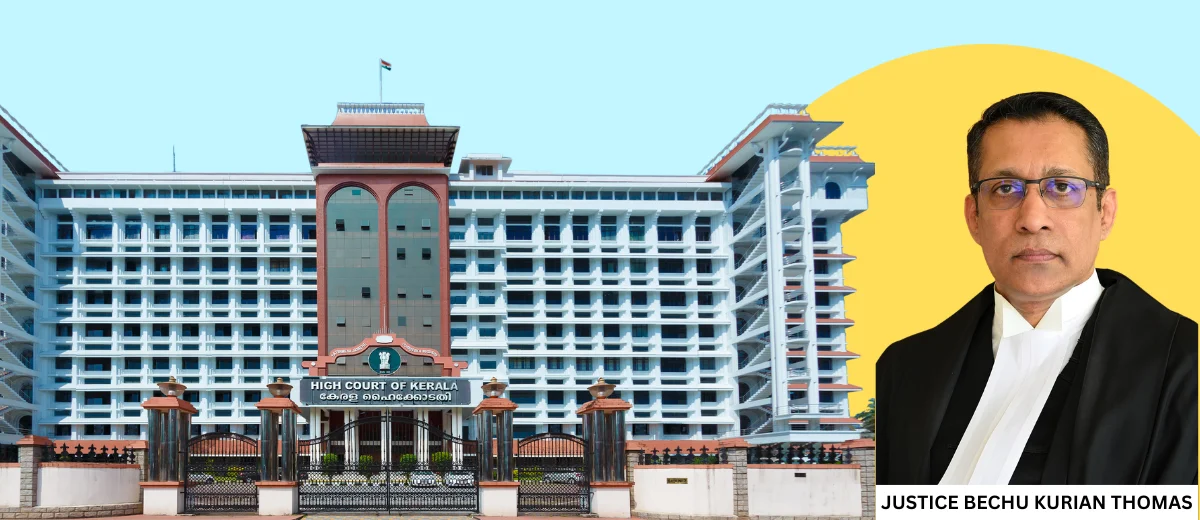
Hon’ble Judge/Coram: JUSTICE BECHU KURIAN THOMAS.
Background: This case addresses an important issue regarding the reproductive rights of women, medical emergencies, and rigid academic regulations in educational institutions. The Kerala High Court had to determine whether maternity leave and a prolonged medical leave due to cancer could be used as grounds to terminate a woman doctor’s candidature from a super-specialty medical programme.
Facts: The petitioner is a qualified doctor who completed her MBBS and MD in General Medicine. She was selected in the NEET Super Speciality Examination of 2022 and allotted the DrNB course in Nephrology at Aster Medicity on 14 December 2022. During the course, she had applied for 184 days of maternity leave from 23.05.2023 to 22.11.2023, which was approved. She also availed other permissible leave, totalling to 207 days of leave in the entire year.
In August 2025, she was diagnosed with Stage IV High-Grade B-Cell Lymphoma, an aggressive type of cancer which required prolonged chemotherapy and rest. She applied for medical leave from 18.08.2025 to 18.02.2026. The NBEMS declined her request, referring to Clause 7(c) of the 2024 Comprehensive Leave Rules, which mandate cancellation of candidature if total leave exceeds 365 days. Her requests were repeatedly denied because the total leave availed by her would be 402 days, if in case the leave was approved. She was asked to re-apply for the leave without exceeding the permitted number of days, otherwise her candidature would be cancelled. Aggrieved, the petitioner approached the Kerala High Court.
Issues:
- Whether maternity leave can be clubbed with other categories of leave for the purpose of applying the one-year maximum leave cap?
- Whether stricter leave rules introduced in 2024 can be applied retrospectively to a trainee admitted under earlier, more flexible rules?
- Whether rigid application of academic regulations is justified in cases involving maternity and life-threatening illness?
- Whether denial of leave in such exceptional circumstances violates the right to health, privacy, equality and dignity?
Arguments of the Parties:
The petitioner submitted that her absence from training was the result of two serious and unpredictable life events: childbirth and a diagnosis of Stage IV high-grade B-cell lymphoma. She argued that maternity leave is a right protected under Articles 14 and 21 of the Constitution. Once her maternity leave had been approved by NBEMS itself, it could not be used against her later on to terminate her candidature.
She submitted that in 2022, the NBEMS rules allowed relaxation in exceptional cases, and she had a legitimate expectation that those rules would apply to her since she joined at that time. The 2024 rules that are far more rigid could not be applied retrospectively in her case. The petitioner said that clubbing maternity leave with other categories of leave would lead to injustice, forcing her to choose between motherhood, survival, and her profession.
The respondents stated that the DrNB requires consistency and clinical exposure. The 2024 rules state that the total leave during training cannot exceed one year, and exceeding the limit would result in cancellation of candidature. If the petitioner’s leave was granted, her total leave would amount to 402 days. Allowing such relaxation would lead to unequal treatment among trainees. Relying on earlier precedents such as Dr. Neha Parashar v. NBEMS, the respondents argued that courts should not interfere in academic and regulatory matters, particularly where expert bodies have framed clear rules for the same.
Judgement and Analysis:
The Kerala High Court held that reproductive rights of women have been recognized as a part of fundamental rights and maternity leave has to be regarded as an aspect of the same. Maternity leave is not a discretionary concession. It cannot be clubbed with other categories of leave for the purpose of cancelling a woman trainee’s candidature.
The 2024 rules cannot be applied rigidly or retrospectively against a candidate who joined under earlier rules which were quite flexible. The petitioner’s illness and maternity came under the purview of extraordinary circumstances which were beyond her control. Hence, a humane approach is needed to deal with this situation. Denial of leave in such a scenario violates the right to health, privacy, equality and dignity of the person in question. NBEMS was directed to permit the petitioner to submit a fresh leave application and consider it sympathetically. Additionally, the petitioner’s candidature cannot be terminated.
Conclusion:
The Kerala High Court’s decision is a progressive affirmation of gender justice and constitutional ideals. Rigid academic rules cannot be applied uniformly and mechanically to penalise women for maternity or other serious illnesses. Administrative regulations must be applied in accordance with proportionality and constitutional ideals, especially where fundamental rights and human dignity are at stake.