
Case Title : THE STATE OF JHARKHAND vs THE INDIAN BUILDERS JAMSHEDPUR
Citation : 2025 INSC 1388
Date : 05.12.2025
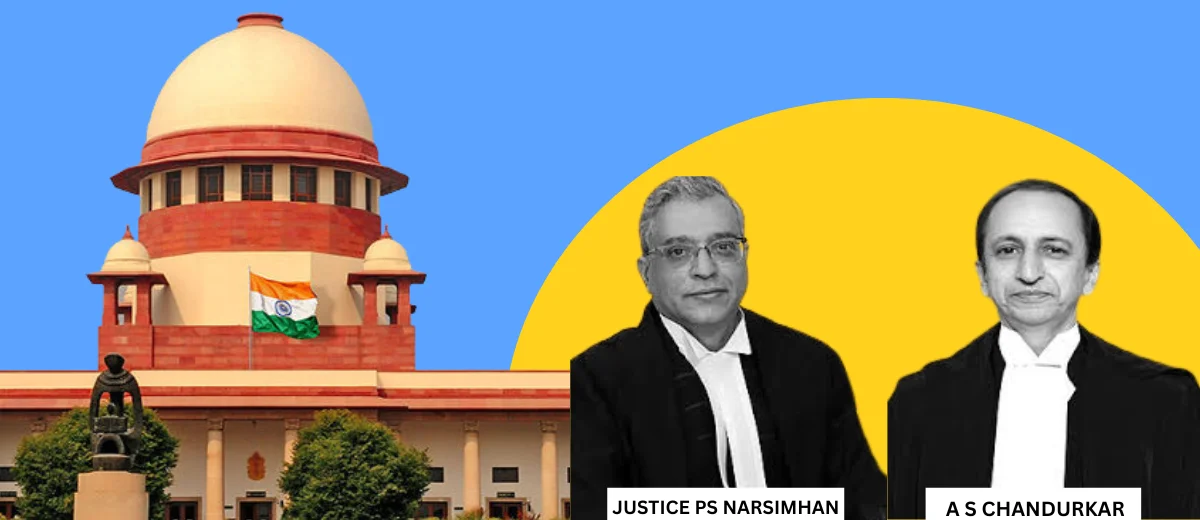
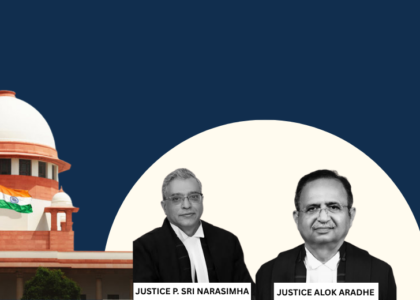
Hon’ble Supreme Court Bench – Justices P S Narasimha and A S Chandurkar.
The recent Supreme Court order (2025) refers Bharat Drilling to a larger bench because the current Court finds the 2009 interpretation flawed. Now let’s understand the case.
The Bharat Drilling Ruling (2009) :The Supreme Court essentially favored the contractor, upholding the Arbitral Tribunal’s decision to grant claims for losses like idle machinery and loss of profit, even though the contract text expressly stated such claims “will not be entertained.”The Court interpreted the prohibitory clause as merely a restriction on the State’s administrative department, preventing the employer from sanctioning such claims internally.The Court held that once a matter is referred to an independent Arbitral Tribunal, the bar is lifted.The arbitrator gains jurisdiction to examine the substance of such claims.To support this conclusion,The court relied upon judicial reasoning related to Article 31(7) of Arbitration Act,which confirms an arbitrator’s statutory power to grant interest even if the contractor prohibits it. By analogy, the Court suggested the Arbitrator’s authority override contractual “no claim’’ clauses for principle claims as well.
Why is the Ruling Now Being Reconsidered ?
- The current Court emphasizes that arbitration is built on party autonomy. If two parties freely agree in a contract that certain claims are barred, the arbitrator’s primary duty is to respect that agreement. The 2009 ruling was seen as undermining the core contract between the parties.
- The Bharat Drilling judgment had erroneously relied on judicial reasoning related to Section 31(7) of Arbitration Act, Court clarified that the power to award statutory interest is fundamentally different from the power to overrule a contractually agreed bar on principal claims. Using the interest precedent to justify awarding prohibited claims was found to be a legal mistake.
- The 2009 ruling failed to provide clear legal reasoning regarding the prohibitory clauses themselves, leading to its “regular and wrong” application in subsequent cases.



 > Mon - Sat, 9:00 AM – 7:30 PM