
Case Title : BALAJI STEEL TRADE vs FLUDOR BENIN S.A
Citation : 2025 INSC 1342
Date : 21.11.2025
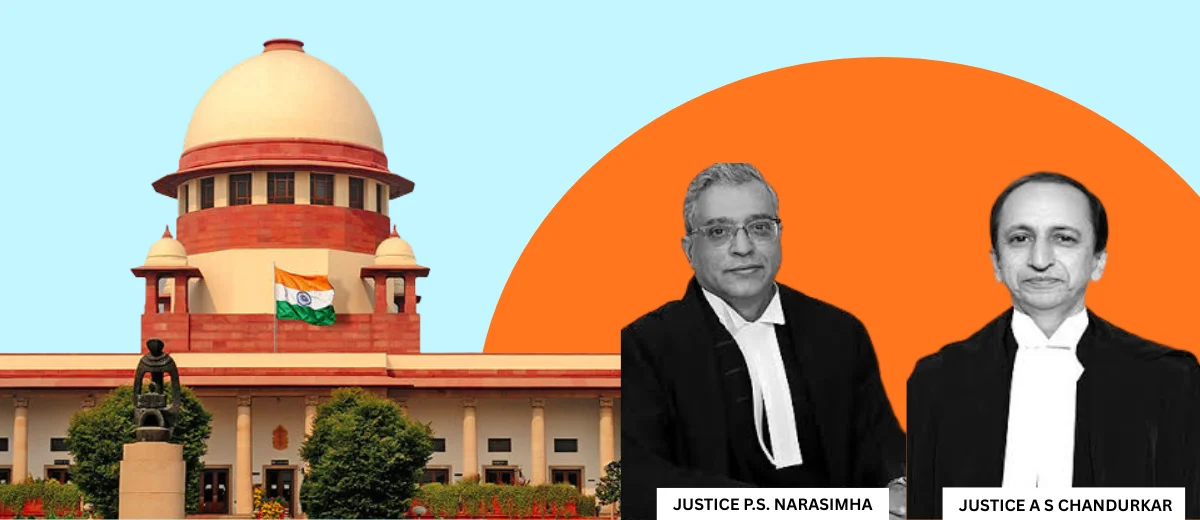
Hon’ble Supreme Court Bench – Justices PS Narasimha and Atul S Chandurkar
The case began with a multi-year partnership between Balaji Steel Trade, an Indian firm, and Fludor Benin S.A., a company based in the Republic of Benin. Their foundational “Mother Agreement”—the Buyer and Seller Agreement (BSA)—stipulated that all disputes would be resolved via arbitration “taking place in Benin” and governed by Benin law.However, as the business evolved, subsequent contracts were signed with other entities (Respondent Nos. 2 and 3) to facilitate specific shipments. These later contracts included clauses for arbitration in New Delhi under the Indian Arbitration and Conciliation Act, 1996. When a dispute arose over short-supplies and payments, Balaji Steel Trade attempted to pull the entire international conflict into the Indian legal system, invoking the “Group of Companies” doctrine to consolidate all parties under one Indian-seated arbitration.The Supreme Court dismissed the petition, reinforcing several critical legal principles for international trade:
- The Court reaffirmed that when parties explicitly choose a foreign “seat” (in this case, Benin) and foreign law, Part I of the Indian Arbitration Act—which includes the power of Indian courts to appoint arbitrators under Section 11—is excluded.
- The BSA was identified as the principal contract defining the long-term relationship. The later sales contracts were merely ancillary “implementing arrangements” for individual shipments and did not “novate” or supersede the original arbitration clause in the BSA.
- The Court also highlighted that Balaji’s claims were barred by “issue estoppel,” as they had previously failed to obtain an anti-arbitration injunction from the Delhi High Court on similar grounds
This judgment serves as a stern reminder that the initial “Mother Agreement” in a commercial relationship carries immense weight. Even if subsequent, smaller contracts suggest a different legal path, the foundational dispute resolution clause remains the dominant force.



 > Mon - Sat, 9:00 AM – 7:30 PM