
Case Name: XXX v. YYY
Petition Number: CIVIL APPEAL @ SLP (CIVIL) NO (S). 28311 OF 2024
Neutral Citation: 2026 INSC 334
Date of Judgement: 07.04.2026
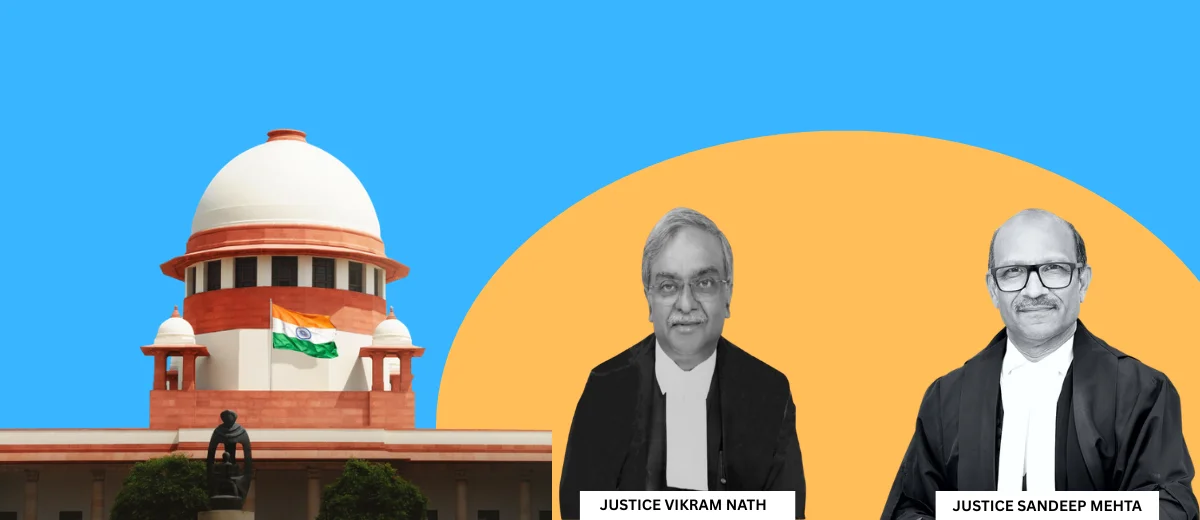
Coram: HON’BLE MR. JUSTICE VIKRAM NATH AND HON’BLE MR. JUSTICE SANDEEP MEHTA
INTRODUCTION
The present case involves two spouses living separately for 10 years, embroiled in a litigation dispute for a decade, with 80 cases registered against each other including against relatives and respective counsels over acrimony. The Supreme Court examined whether the respondent-husband, a lawyer, had to pay alimony to the appellant-wife and described the dispute to be the ‘Matrimonial Battle of Mahabharata’.
FACTS AND PROCEDURAL HISTORY
The parties were married in 2010 according to Hindu Marriage Rites and had two children. Due to irrevocable differences, they parted in 2016 and began living separately. After the separation, the appellant-wife sought an injunction, not to disturb her peaceful possession over the shared matrimonial home as well as filed a petition for divorce accompanied by an application for interim maintenance before the Family Court. In 2019, the learned Family Court granted the injunction and interim maintenance, directing the respondent-husband to pay Rs. 80,000 per month to the appellant-wife.
Due to the husband’s non-compliance, the wife filed a Regular Darkhast Petition as Execution proceedings for recovery of the arrears. It is pertinent to note that in 2018, the respondent-husband filed a Criminal Miscellaneous Application for prosecuting the wife, alleging perjury, which was rejected. The respondent-husband also challenged the interim maintenance and other orders of the learned Family Court by filing multiple applications between 2019 and 2024, seeking adjournments. Despite several undertakings upon opportunity granted by the learned Family Court in the interest of justice, the respondent husband failed to deposit the arrears. The appellant-wife approached the Supreme Court to warrant interference to expedite the execution proceedings and recovery of maintenance arrears to be paid by the respondent-husband as per the maintenance order. The respondent-husband also filed an application for divorce under Article 142 of the Constitution of India.
ISSUE
Whether the respondent husband is bound to pay maintenance to the appellant-wife?
SUBMISSIONS OF THE PARTIES
On 25th February 2025, the Counsel for the appellant-wife submitted that the respondent-husband filed complaints in the Bar Council and Criminal Courts against the advocates representing her. The Counsel further contended that the respondent-husband being a lawyer misused his knowledge to frustrate the execution proceedings and intimidate the advocates of the appellant. The appellant wife filed an Interlocutory Application, requesting to stay all proceedings before all courts and forums pertaining to the case which was granted by the Supreme Court, considering the request of a decree of divorce by both parties. The appellant-wife submitted that the marriage was practically irretrievable and there was no possibility of reconciliation. She added that the respondent-husband wilfully abstained from his legal and moral obligations and filed over 80 proceedings against the appellant, her relatives and advocates.
The respondent-husband filed a Writ Petition contending that the appellant-wife committed fraud and violated his fundamental rights, which was rejected by the Supreme Court as frivolous. He further contended that the appellant-wife filed multiple false criminal cases against him and had taken unilateral custody of the children. He alleged that the appellant’s claim for maintenance was inflated, given her high income and qualifying profession. He urged the Court to direct the appellant to vacate the matrimonial home as she was not entitled to it which rightfully belonged to his father and prayed for compensation on account of mental trauma and illegal detention inflicted by the appellant-wife.
JUDGEMENT AND ANALYSIS
The Supreme Court noted the multiplicity of litigations in the present case that has resulted in the bitter marriage. The Court also noted that the respondent-husband tried to frustrate the proceedings by filing innumerable applications, including before the State Bar Council against the appellant’s advocates only to abstain from his moral and legal obligations. The Court held that the marriage is dead for all practical purposes, warranting jurisdiction under Article 142 of the Constitution. Therefore, it was pronounced not only to annul the marriage, but end all proceedings between the parties to do complete justice.
The Court also noted the respondent-husband using his reasoning of financial incapacity to absolve himself of the paternal, matrimonial, legal and moral responsibilities towards his wife and children and directed him to carry them out hereafter. The Court granted absolute custody of the children to the appellant-wife, while granting visitation rights to the respondent-husband, besides directing the respondent-husband to pay a consolidated sum of Rs. 5 crores to settle all claims of alimony, maintenance, child support and litigation expenses. The Court also directed the appellant wife to vacate the matrimonial home and the respondent-husband to furnish an undertaking that he will not file any civil or criminal proceedings against the appellant, her relatives or advocates hereafter.
CONCLUSION
The present case is thus a stark reminder of how litigation disputes can be misused with knowledge and delay justice from being served.



 > Mon - Sat, 9:00 AM – 7:30 PM