Case Name: DINESH KUMAR V. SURTA NATH @ SURAT NATH & ORS.
Petition Number: SLP (CIVIL.) No. 18487 of 2023
Neutral Citation: 2026 INSC 485
Date of Judgment: 29.04.2026
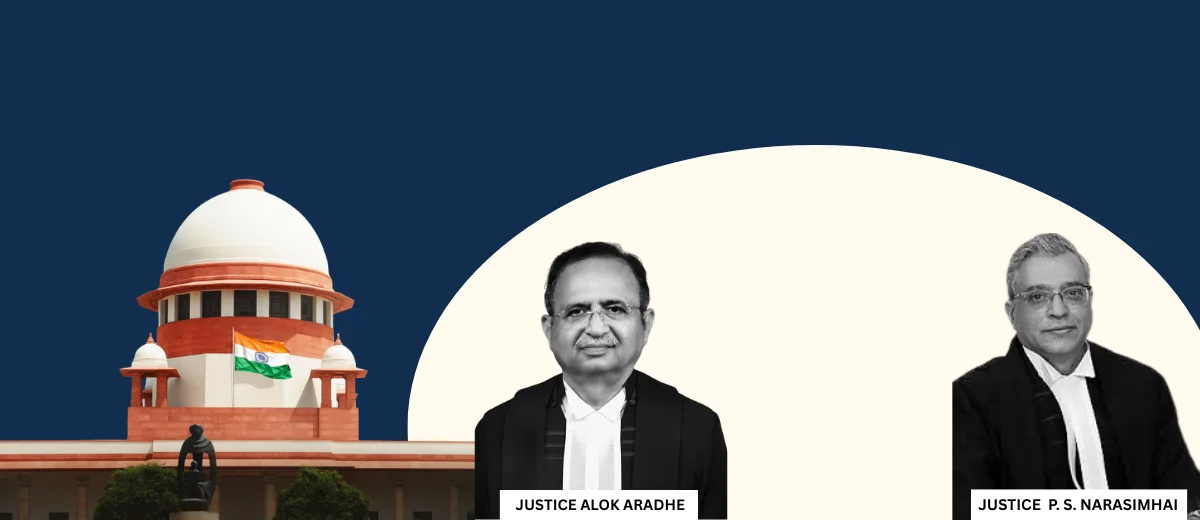
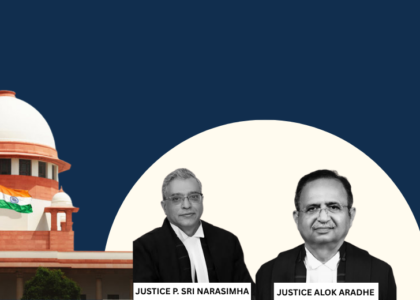
Coram: HON’BLE MR. JUSTICE ALOK ARADHE & HON’BLE JUSTICE MR. PAMIDIGHANTAM SRI NARASIMHA
Relevant Provisions: U.P. Panchayat Raj (Settlement of Election Disputes) Rules, 1994 and Code of Civil Procedure, 1908.
INTRODUCTION
The primary issue before the Court was whether Rule 4 of the U.P. Panchayat Raj (Settlement of Election Disputes) Rules, 1994 excludes the right of a contesting party to cross-examine witnesses whose affidavits are relied upon in support of an election petition. The Supreme Court held that Rule 4 does not abrogate the principles of cross-examination or the broader procedural safeguards underlying the Code of Civil Procedure, 1908. The phrase “as nearly as may be” signifies that election petitions are to be tried substantially in accordance with civil trial procedure, while allowing limited procedural flexibility in matters concerning the mode and recording of evidence.
FACTS
The dispute arose from the election to the post of Pradhan of Gram Panchayat Parwa, Mirzapur, in which the appellant won by a margin of one vote against the first respondent. The defeated candidate challenged the election before the Election Tribunal under Section 12-C of the U.P. Panchayat Raj Act, 1947. During the proceedings, two witnesses filed affidavits in evidence, following which the appellant sought permission to cross-examine them to test the truthfulness of their statements. The Election Tribunal rejected the request, holding that cross-examination was not necessary under the U.P. Panchayat Raj (Settlement of Election Disputes) Rules, 1994.
The High Court affirmed this view and observed that Rule 4 of the 1994 Rules constituted a self-contained procedure for recording evidence in election disputes. Relying on provisos (ii) and (iv) to Rule 4, the High Court held that the Tribunal could permit only such evidence as it considered relevant and was not obliged to follow the detailed procedure of the Civil Procedure Code regarding cross-examination. It therefore concluded that the provisions of Order XVIII Rule 4 CPC and Section 137 of the Evidence Act had limited application in such proceedings.
ISSUE
Whether the scheme of Rule 4 of the 1994 Rules can be construed so as to exclude the right of a contesting party to cross-examine witnesses whose affidavits have been brought on record in support of an election petition?
JUDGMENT AND ANALYSIS
The Supreme Court held that Rule 4 of the U.P. Panchayat Raj (Settlement of Election Disputes) Rules, 1994 does not completely exclude the principles of cross-examination or the broader procedural safeguards embodied in the Code of Civil Procedure. The expression “as nearly as may be” in Rule 4 indicates that election petitions must substantially follow the procedure applicable to civil trials, while permitting flexibility regarding form and recording of evidence. The Court clarified that the provisos to Rule 4 only relax procedural rigours and cannot be interpreted to eliminate the substantive principles of natural justice.
It relied on decisions such as Muddasani Venkata Narsaiah v. Muddasani Sarojana [(2016) 12 SCC 288] and K.L. Tripathi v. State Bank of India [(1984) 1 SCC 43], wherein this Court underscored that cross-examination is “a matter of substance and not of procedure”, and that failure to cross-examine a witness ordinarily leads to an acceptance of the truth of his testimony. It was further held that the obligation to confront a witness in cross-examination is “one of essential justice and not merely technical”. However, the right is not absolute and depends upon the nature of the dispute. A party seeking cross-examination must disclose specific reasons demonstrating why such examination is necessary.
Applying this principle, the Court found that the appellant’s application merely sought permission to cross-examine witnesses without assigning any grounds or identifying disputed facts requiring such testing. The Election Tribunal was therefore justified in rejecting the request as unnecessary and dilatory. While affirming the dismissal of the application and the appeal, the Court disagreed with the High Court’s observation that Rule 4 constituted a complete code excluding cross-examination altogether. The appeal was consequently dismissed with clarification of the correct legal position.
CONCLUSION
The Supreme Court clarified that Rule 4 of the 1994 Rules does not bar cross-examination in election disputes and that principles of natural justice continue to apply. However, the right is not automatic. A party seeking cross-examination must disclose sufficient and justifiable reasons showing why such examination is necessary for adjudication of disputed facts or witness credibility. Under Rule 4, the Sub-Divisional Officer, acting as Election Tribunal, is empowered to consider the request and on being satisfied may permit cross-examination. In the present case, the appellant did not give any reason to justify cross-examination of the witnesses, and therefore the civil appeal stood dismissed.


 > Mon - Sat, 9:00 AM – 7:30 PM