Case Name: AJAY VIJH V. INDIAN BANKS ASSOCIATION & ORS.
Petition No.: Diary No. 10787/2024
Neutral Citation: 2026 INSC 670
Date of Judgement: 07.07.2026
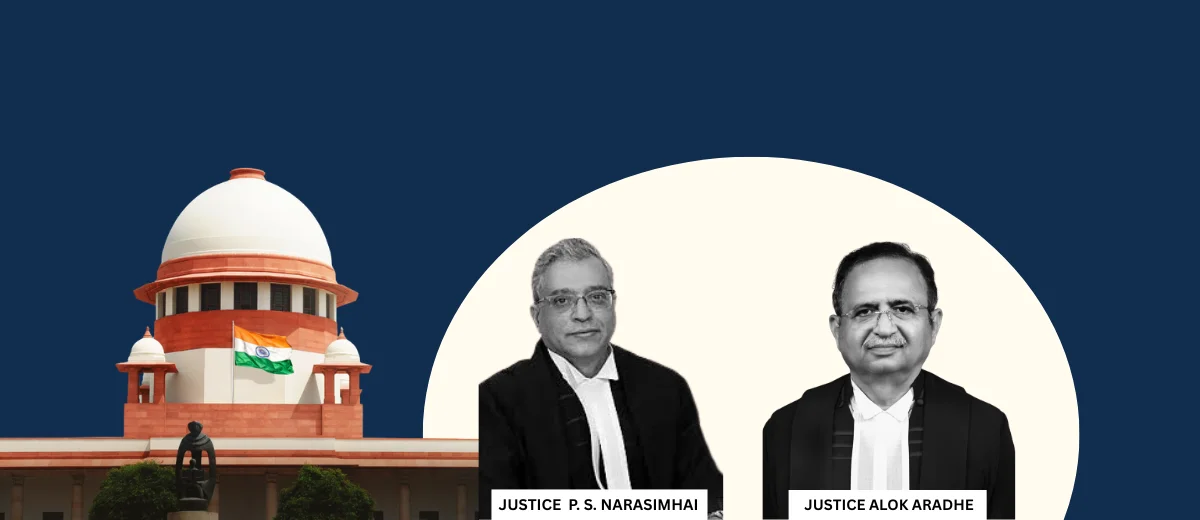
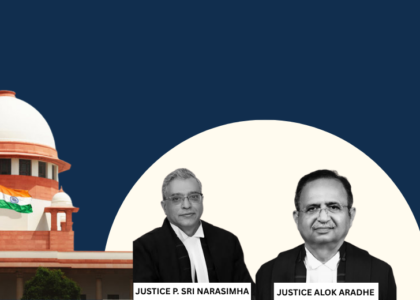
Coram: Hon’ble Mr. Justice Pamidighantam Sri Narasimha and Hon’ble Mr. Justice Alok Aradhe
Relevant Statutes & Provisions: Articles 12, 19(1)(g) and 226 of the Constitution of India; Section 35-A of the Banking Regulation Act, 1949; Sections 35, 36, 37 and 38 of the Advocates Act, 1961
INTRODUCTION
The Hon’ble Supreme Court has held that the IBA Caution List, maintained under RBI guidelines, is confined to alerting banks about fraud and cannot be used to brand an advocate as professionally negligent. Since such allegations fall exclusively within the disciplinary domain of the Advocates Act, 1961, the Court directed removal of the appellant’s name from the List and directed the Bar Council of India to audit its disciplinary mechanism.
FACTS
The Appellant, an advocate enrolled in 1998, was empanelled with the respondent Bank and furnished a legal opinion in 2015 on property offered as loan security. In 2018, the Bank alleged the opinion overlooked a prior sale of part of the property, removed him from its panel for negligence, and reported him to the IBA, which, with effect from 05.02.2020, and included his name in the Caution List titled “Third Party Entities Involved in Fraud”, without prior notice. His writ petition was dismissed by the Allahabad High Court on the ground that the IBA is not “State” under Article 12, without examining the merits, and the present appeal was preferred against this dismissal.
ISSUES
- Whether the writ petition under Article 226 of the Constitution challenging the inclusion of the Appellant’s name in the IBA Caution List was maintainable?
- Whether the inclusion of an advocate’s name in the Caution List maintained by banks and financial institutions is merely an administrative measure confined to the contractual relationship between the bank and its panel advocate, or whether such inclusion has a bearing on legal and constitutional rights of the parties?
- Whether allegations relating to professional misconduct or negligence of an advocate fall within the disciplinary domain under the Advocates Act, 1961, and the Bar Councils have exclusive jurisdiction to deal with them?
ARGUMENTS OF PARTIES
The Appellant submitted that his grievance was not his de-empanelment, but the inclusion of his name in the Caution List with remarks impugning his professional competence, infringing his right to practise under Article 19(1)(g). It was submitted that the writ was maintainable despite the IBA not being “State” under Article 12, and that the RBI’s fraud-reporting framework could not be extended to mere negligence, which fell exclusively within the Bar Councils’ jurisdiction under the Advocates Act, 1961.
The Respondents submitted that the IBA was not amenable to writ jurisdiction under Article 226, relying on Kishor S. Bhat v. Indian Banks’ Association, 2018 SCC OnLine Bom 2857. It was submitted that the RBI circulars expressly permit reporting of professionals whose acts expose banks to financial risk, that the Appellant’s opinion had exposed the Bank to such risk, and that the Bank, being in a contractual relationship with its panel advocates, was entitled to report him to the IBA.
JUDGEMENT AND ANALYSIS
Regarding the first issue, the Court held the writ petition maintainable notwithstanding that the IBA may not be “State” under Article 12. Tracing the shift in judicial focus from the identity of the respondent to the nature of the functions it performs, the Court relied on Andi Mukta Sadguru Shree Muktajee Vandas Swami Suvarna Jayanti Mahotsav Smarak Trust v. V.R. Rudani, (1989) 2 SCC 691, Zee Telefilms Ltd. v. Union of India, (2005) 4 SCC 649, Kaushal Kishor v. State of U.P., (2023) 4 SCC 1, and S. Shobha v. Muthoot Finance Ltd., 2025 SCC OnLine SC 177, to hold that “any person or authority” under Article 226 covers bodies discharging public functions wherever a public law element exists.
The Appellant’s real grievance, the Court held, lay not in his de-empanelment but in the fact that being placed on the Caution List cast a shadow over his standing across the profession, threatening his livelihood and future engagements and thus striking at his right under Article 19(1)(g) to practise law. Distinguishing Kishor S. Bhat v. Indian Banks’ Association 2018 SCC OnLine Bom 2857, as confined to a private employment dispute between the IBA and one of its own staff, the Court, noting that comparable challenges had found favour before several High Courts, concluded that the Caution List “possesses sufficient public law character to render it amenable to judicial review”.
Regarding the second issue, the Court traced the Caution List to the RBI Circular dated 16.03.2009 issued under Section 35-A of the Banking Regulation Act, 1949, and its successors, the 2016 Directions and the 2024 Master Directions on Fraud Risk Management, holding this framework confined to third parties who had colluded in fraud, and having no bearing on professional advice rendered negligently but in good faith. The Court further observed that fraud imports an element of mens rea and deliberate intention and design to defraud, an erroneous legal opinion, absent dishonest intent, cannot be elevated to the level of fraud. The Court then held that the inclusion of the appellant’s name in the Caution List was unsustainable in view of the fact that the allegation against the appellant pertains solely to negligence. The Court further held that the respondent Bank and IBA cannot include the name of the appellant in the Caution List. Consequently, they were directed to remove the appellant’s name from the Caution List with immediate effect.
Regarding the third issue, the Court held that allegations of professional negligence against an advocate fall exclusively within the disciplinary machinery under the Advocates Act, 1961. Describing the profession as sui generis, following Bar of Indian Lawyers v. D.K. Gandhi PS National Institute of Communicable Diseases, (2024) 8 SCC 430, the Court held that the Bar’s independence, secured through self-regulation,“is as important as independence of the judiciary”. Relying on Supreme Court Bar Association v. Union of India, (1998) 4 SCC 409 and Bar Council of Maharashtra v. M.V. Dabholkar, (1975) 2 SCC 702, the Court reiterated that the power to punish an advocate for misconduct vests exclusively in the Bar Councils under Sections 35 to 38 of the Advocates Act, 1961.
Permitting banks or the IBA to bypass this mechanism and unilaterally portray an advocate as incompetent was held to be “illegal, unsustainable and impermissible”, amounting to a circumvention of the Bar’s freedom of self-regulation. The Court remarked that the solution for accountability lies not in creation of parallel structures, like declarations in Caution List’s, as in the present case, but in strengthening the existing regulatory mechanisms contemplated under the Advocates Act, 1961 itself.
In Para 47, the Court held that an objective assessment of the disciplinary framework governing advocates should examine, among other matters; i) The number of complaints instituted annually before each State Bar Council. ii) The number of complaints disposed of annually. iii) Average and median disposal times. iv) Age-wise pendency of cases. v) Regional variations in disposal patterns. vi) Procedural practices adopted by different Bar Councils. vii) Adequacy of staffing and administrative support. viii) Nature of outcomes and sanctions imposed. ix) Accessibility and transparency of disciplinary proceedings. x) Compliance with statutory timelines. The Court further highlighted that meaningful evaluation of the existing system requires participation of multiple stakeholders, including representatives of litigants as well as experts in public administration, data analysis professionals, and individuals with experience in institutional reform.
CONCLUSION
The Supreme Court allowed the appeal, set aside the Allahabad High Court’s judgment, and directed immediate removal of the Appellant’s name from the Caution List, holding its inclusion illegal and without jurisdiction. The judgment reaffirms that allegations of professional negligence against advocates must be pursued exclusively before the Bar Councils under the Advocates Act, 1961, and directs the Bar Council of India to audit its disciplinary mechanism and institutionalise Continuing Legal Education, with the matter listed for further consideration on establishing a National Legal Academy for lawyers.


 > Mon - Sat, 9:00 AM – 7:30 PM