
Case Title : State of U.P. Vs. Ajmal Beg
Citation : 2025 INSC 1435
Date : 15.12.2025
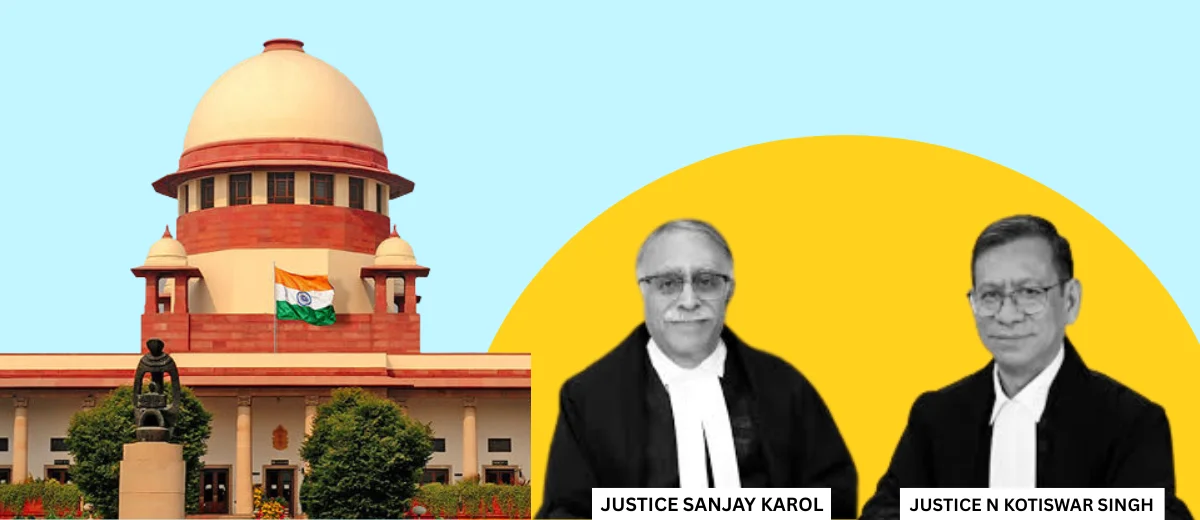
Hon’ble Supreme Court Bench – Justices SANJAY KAROL and N.K SINGH
In the judgment of state of U.P. v. Ajmal Beg, the Supreme Court provides a deep historical and legal analysis of dowry and its contrast with the Islamic concept of Mehr. The case centered on relentless demands for a “groom price,” specifically a colored television, a motorcycle, and ₹15,000 in cash, evidence established that Nasrin had visited her parents 10–12 times during her brief marriage, consistently reporting harassment and threats to her life if the dowry demands remained unfulfilled. Just one day before Nasrin was found burnt to death, her husband, Ajmal Beg, had once again demanded these specific items from her father, who expressed his inability to pay due to his financial constraints.While the Trial Court convicted the husband and mother-in-law, the High Court acquitted them by doubting witnesses and suggesting that “poor” families wouldn’t demand luxury items like motorcycles—a logic the Supreme Court later rejected as mere conjecture. The Supreme Court clarified that minor inconsistencies—such as a mother’s comment that her daughter seemed “happy”—should not invalidate an entire case, as witnesses often contain “grains of untruth” while the core facts of the crime remain clear. The Supreme Court while criticizing the prevalence of dowry in the society, upheld :
- Dowry originally began as a voluntary practice of giving gifts to a daughter for her financial independence, but it eventually morphed into an institutionalized system of “marrying up” (hypergamy) to consolidate social status and wealth.
- In modern times, the Court observed that dowry has divorced itself from the woman’s well-being and turned into a “groom price theory,” where the amount is determined by the groom’s social standing, education, and earning capacity.
- The Court explained that dowry diffused into the Muslim community through cultural assimilation and social emulation, particularly in urban centers where it became a competitive status marker for marriage negotiations.
- In many contemporary Muslim marriages in India, Mehr and dowry coexist, but the Mehr is often reduced to a nominal amount. This shift hollows out the protective function of Mehr, as real financial power transfers from the bride’s family to the groom.