
Case Name: ANJANI TECHNOPLAST LTD. V. SHUBH GAUTAM
Petition Number: Civil Appeal No. 8247 of 2022
Neutral Citation: 2026 INSC 410
Date of Judgment: 23.04.26
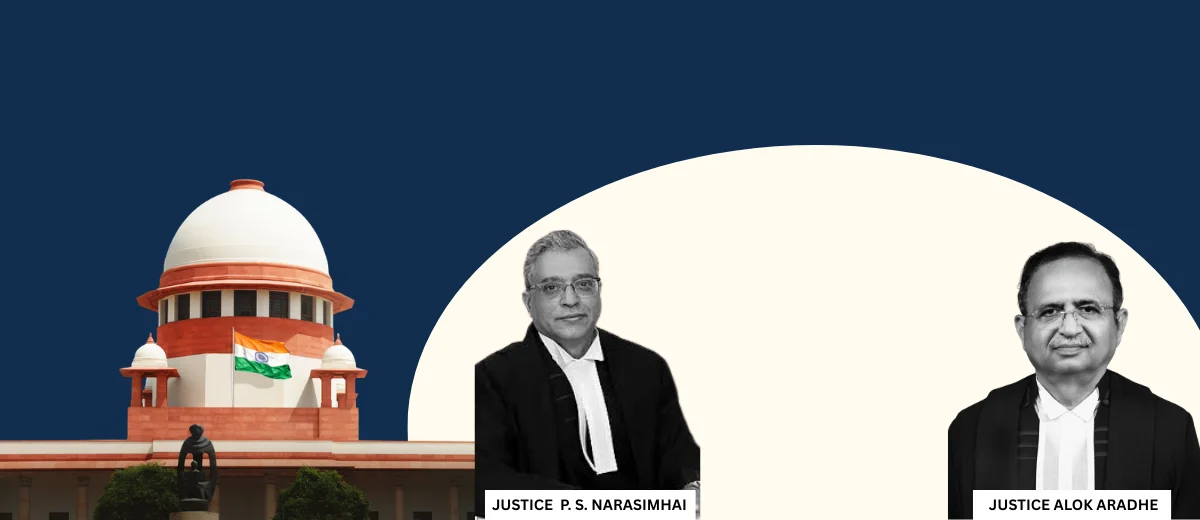
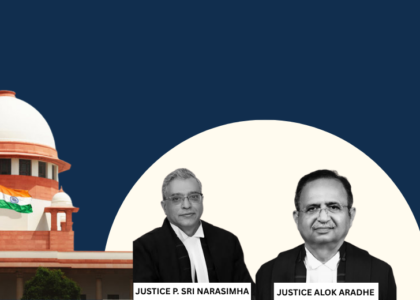
Coram: HON’BLE MR. J. PAMIDIGHANTAM SRI NARASIMHA & HON’BLE MR. J. ALOK ARADHE
INTRODUCTION
In this case, the Supreme Court examined whether a money decree-holder can bypass civil execution proceedings and use the IBC (Insolvency and Bankruptcy Code) to initiate CIRP (Corporate Insolvency Resolution Process) against a corporate debtor. The Supreme Court held that, on these facts, such use of the IBC was an abuse of process and a recovery mechanism, not a genuine insolvency proceeding. The Court emphasized that the IBC is a beneficial legislation for the revival of distressed companies, not a “recovery legislation” for individual creditors.
FACTS AND PROCEDURAL HISTORY
The respondent, a money lender, advanced two short-term loans totalling Rs. 4.5 crores to the appellant in 2010, both carrying interest and supported by security cheques. The cheques were dishonoured, leading to proceedings under Section 138 of the Negotiable Instruments Act, after which the parties entered a compromise in 2013 and later another compromise in 2016. A summary suit filed by the respondent in the Delhi High Court which resulted in a decree dated 11 January 2018 for Rs. 4,38,00,617 with 24% interest. This decree attained finality after the Supreme Court dismissed the appellant”s SLP in 2021. Instead of executing the decree, the respondent filed a Section 7 petition under the IBC in 2021. The NCLT dismissed the petition, viewing it as a misuse of the process against a solvent company. However, the NCLAT reversed this decision, directing admission of the petition on the ground that a decree provides a fresh cause of action for insolvency. The matter then reached the Supreme Court.
ISSUES
1.Whether a financial creditor holding a money decree can use Section 7 of the IBC as a substitute for execution proceedings against a solvent company ?
2.Whether the initiation of CIRP in the presence of a disputed computation of decretal debt constitutes an abuse of the insolvency process ?
SUBMISSIONS OF THE PARTIES
Appellant (Anjani Technoplast Ltd.): The appellant submitted that they are a solvent company and running company with Rs. 35 crore revenue and 95 employees, so CIRP was being misused as pressure for recovery rather than for insolvency resolution. They contended that debt was seriously disputed due to uncredited prior payments and inconsistent claims made by the respondent before the Income Tax Authorities.
Respondent (Shubh Gautam): The respondent relied on the loan agreements, interest clauses, and the decree, arguing that the debt was a financial debt and that a decree gave rise to a fresh cause of action to trigger CIRP. They claim that total dues now exceeded Rs. 12 crores based on the 2018 decree. They also resisted the fraud allegations and maintained that the Section 7 petition was maintainable.
JUDGMENT AND ANALYSIS
The Supreme Court held that the respondent could not use Section 7 of the IBC as a substitute for executing a final money decree, because the real dispute was about computation and recovery, not genuine insolvency. The Court first relied on Swiss Ribbons (P) Ltd. v. Union of India (2019) 4 SCC 17, where the IBC was described as a beneficial legislation intended to revive the corporate debtor and not a mere recovery statute for creditors. Applying that principle, the Court observed that insolvency proceedings should not be converted into a pressure tactic for recovering dues from a solvent company.
It then referred to Pioneer Urban Land and Infrastructure Ltd. v. Union of India (2019) 8 SCC 416, which clarified that the IBC is not a forum for individual creditors to realise dues through the back door of insolvency. The moment a Section 7 petition is admitted, the process moves entirely beyond the control of the petitioning creditor and operates for the collective benefit of all stakeholders. The insolvency mechanism cannot be pressed into service as a substitute for ordinary execution or recovery proceedings. Another precedent GLAS Trust Co. LLC v. BYJU Raveendran (2005) 3 SCC 625 was cited by the Court where it was held that the IBC must not be used as a tool for coercion or debt recovery by individual creditors. On that basis, the Court treated the respondent’s Section 7 petition, filed despite availability of execution proceedings as an improper attempt to use insolvency to force payment.
The Court also cited Tottempudi Salalith v. State Bank of India (2024) 1 SCC 24, which reiterated that the IBC is not really a debt recovery mechanism, though debt recovery may incidentally occur during resolution. The Supreme Court relied on this distinction to show that the respondent’s case was not about resolution of insolvency but about enforcing a disputed decree amount. Importantly, the Court clarified that Dena Bank does state that a money decree in favour of a financial creditor may give rise to a fresh cause of action under Section 7, but that principle is not absolute and must be tested on the facts. Therefore, the Court concluded that using IBC would amount to an abuse of process and a recovery mechanism. The court held that the initiation and maintenance of CIRP proceedings against the appellant cannot be sustained.
CONCLUSION
The Supreme Court allowed the appeal, setting aside the NCLAT’s order and restoring the NCLT’s dismissal of the Section 7 petition. It held that CIRP cannot be used as an alternative execution process for enforcing a money decree when civil remedies are available and the debt quantum is disputed. Also, the respondent was granted liberty to pursue execution of the decree in civil court, and the appellant was awarded Rs. 5,00,000 in costs. The court remarked that the insolvency process is a remedy with far-reaching consequences and must be reserved for cases of genuine insolvency or financial distress, not for the enforcement of money decrees.


 > Mon - Sat, 9:00 AM – 7:30 PM