Case: Jaya Thakur Vs. Government of India and Ors.
Petition Number: Writ Petition (C) No. 1000 of 2022
Citation: 2026 INSC 97
Date of Judgement: 30.01.2026
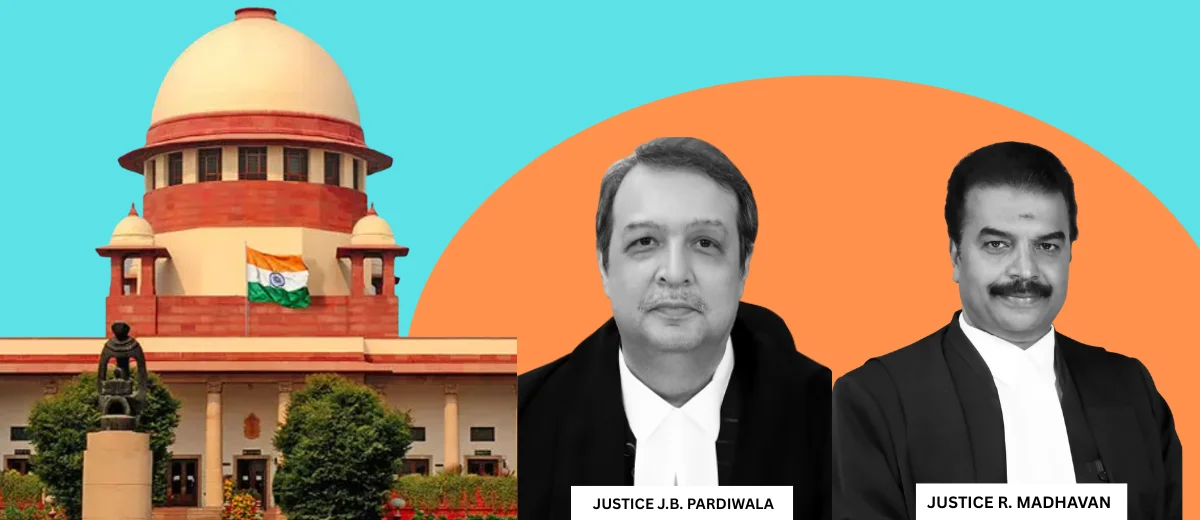
Hon’ble Judges/Coram: Justice J.B. Pardiwala and Justice R. Mahadevan.
Introduction:
“A period should end a sentence, not a girl’s education.” These words of Melissa Berton were used by the Apex Court to highlight the harsh reality that thousands of school-going girls in India are deprived of their rights due to the absence of basic menstrual facilities.
Facts of the Case:
This PIL was filed by Jaya Thakur, a social worker, under Article 32 of Constitution in the interest of adolescent girls all over the country, especially the ones studying in government-funded schools. The petition highlighted the issues faced by the young girls due to limited or no access to basic menstrual hygiene facilities. The grievance was not confined to the non-availability of sanitary products alone but extended to the systemic failure of infrastructure and awareness. The schools lack clean water-supply and functional and segregated toilets forcing them to not show up regularly, ultimately resulting in higher dropout rates as well. Due to the lack of menstrual products and safe disposal mechanisms, they often resort to unsafe items such as old clothes, which could have long term effects on their reproductive health. There are multiple governmental schemes but due to poor implementation, the young girls still continue to suffer. This a gross violation of their fundamental rights. The petitioner urged for the issuance of a writ of mandamus directing the Union of India and the States and UTs to take concrete steps to ensure the provision of free sanitary pads to every female child from classes 6 to 12 and separate toilets for females in all government, aided, and residential schools.
Issues of the Case:
- Whether non-availability of separate toilets for girls and no access to pads or other period products is a violation of Article 14?
- Whether the right to dignified menstrual health is a part of Article 21?
- Whether unavailability of gender-segregated toilets and no access to menstrual products is in violation of the right of participation and equality of opportunity as mentioned under Right to Equality?
- Whether unavailability of gender-segregated toilets and no access to menstrual products is in violation of Article 21A as well as the right to free and compulsory education under the Right of Children to Free and Compulsory Education Act, 2009?
Arguments of the Parties:
The petitioner argued that lack of menstrual hygiene facilities in schools violates Article 21 as it affects the health, dignity, and privacy of girls. It was contended that girls are indirectly discriminated against because their basic needs are ignored. The petitioner further submitted that when girls are forced to miss school during menstruation, their right to education under Article 21A is denied. It was emphasized that mere existence of government schemes is insufficient without effective implementation.
The Government argued that several welfare schemes and policies have already been formulated for ensuring menstrual hygiene in schools. It submitted that sanitation and health fall within the policy domain, and courts cannot interfere in administrative matters. The Government also contended that implementation depends on State Governments and logistical constraints, and there was no intentional violation of fundamental rights.
Judgement and Analysis:
- The Supreme Court held that menstrual hygiene is not just a welfare issue but a matter of constitutional importance. The Court stated that the right to life has a broad meaning under Article 21 which includes the right to live with dignity, and forcing girls to attend school without proper menstrual facilities violates this right.
- It further observed that treating everyone the same does not ensure equality. Instead, equality under Article 14 requires the State to consider the special needs of girls. The Court also emphasized that the right to education under Article 21A must be protected, and it is considered a gross violation of the same if girls are unable to attend school regularly due to lack of basic facilities.
- The Court made it clear that well-made schemes on paper with poor implementation mechanisms do not fulfil constitutional obligations. Accordingly, the Supreme Court directed the authorities to ensure availability of menstrual hygiene facilities in schools, stressing that financial or administrative difficulties cannot justify the violation of fundamental rights. The Hon’ble Court reaffirmed that the State has a positive duty to protect the health, dignity, and education of school-going girls, which is why monitoring mechanisms are needed and most importantly, a dignity-based approach to menstrual health is the need of the hour.
Conclusion:
The Court’s observations in this case reaffirm that menstrual health and hygiene are integral to a girl’s dignity, equality, and right to education. It comes under the purview of the right to life as well, and the governmental authorities are responsible for ensuring that these rights are protected.