
Case Title : GULFISHA FATIMA vs STATE (GOVT. OF NCT OF DELHI)
Citation : 2026 INSC
Date : 05.01.2026
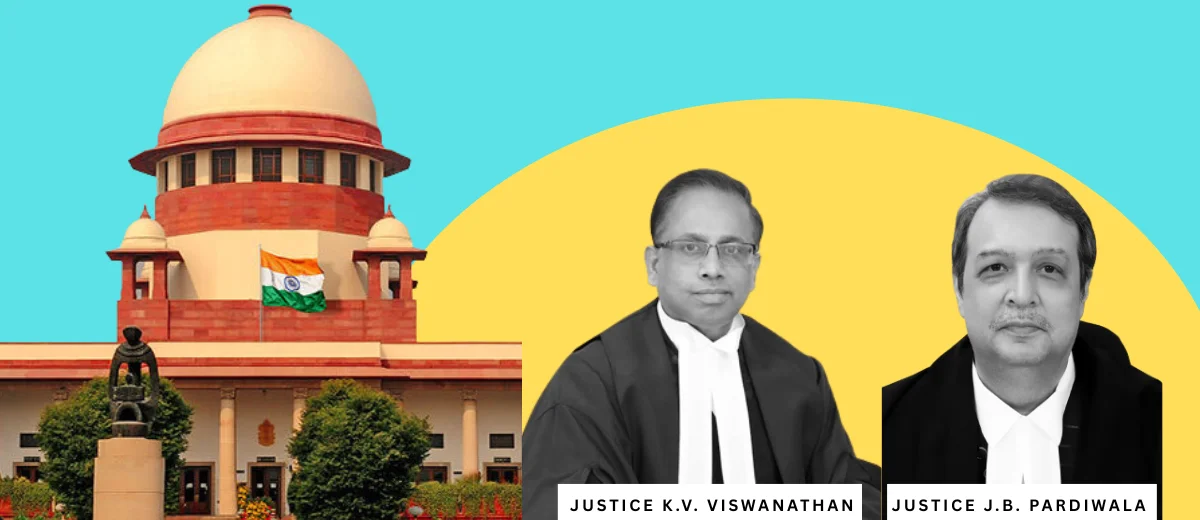
Hon’ble Supreme Court Bench – Justice JB Pardiwala and Justice KV Vishwanathan
The case centred on the long tug of war of personal liberty vs national security and focused on the important constitutional question of whether a long delay in trial overrides the strict ‘ No bail’ provisions of the UAPA. The appellants, including Gulfisha Fatima, Umar Khalid, and Sharjeel Imam, argued that their incarceration for over five and a half years without a trial even starting was a violation of their Right to Life under Article 21. However, the court took a nuanced approach and gave a differentiated verdict based on the footing and roles of the appellants in regard to Delhi riots. The most striking part of this judgment is the Court’s decision to categorize the accused into two distinct groups based on their alleged involvement.
- The Court declined bail for individuals like Umar Khalid and Sharjeel Imam. The Justices noted that the prosecution’s evidence suggested they were part of the “conceptualization” and strategic planning of the riots. Because their roles were seen as foundational to the violence, the Court held that the “prima facie true” threshold for denying bail under Section 43D(5) of the UAPA was still met.
- In contrast, the Court granted bail to Shadab Ahmed and Mohd. Saleem Khan. The Bench observed that these individuals were “local-level facilitators” whose roles were geographically confined to specific protest sites. The Court found that their continued detention was no longer proportionate or necessary to ensure a fair trial.
- Guilt by association is not enough; the specific actions of an accused determine their right to liberty.
The Bench made one thing very clear: jail should not be a permanent substitute for a trial. To prevent the law from becoming a tool of “indefinite detention,” the Court directed the Trial Court to proceed on a day-to-day basis. This ensures that the state cannot simply keep people in prison without eventually proving its case in court.