Case Brief: SATYAM ATUL SURANA Vs STATE OF MAHARASHTRA & ORS.
Citation: PIL No. 118 of 2025
Date: 27.01.2026
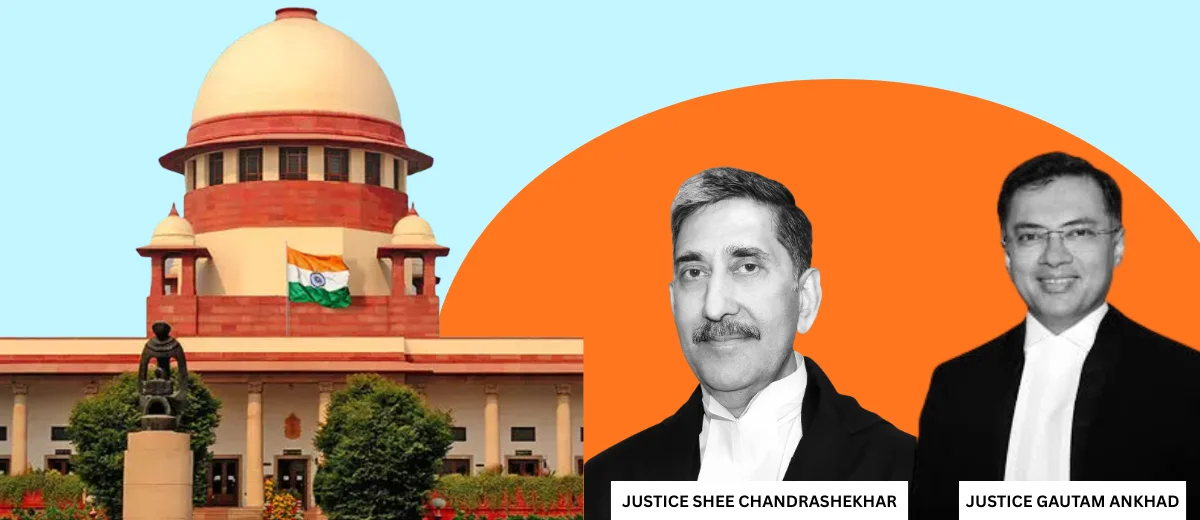
Hon’ble Bombay High Court Bench: Chief Justice Shree Chandrashekhar and Justice Gautam A. Ankhad
Case Brief- The Hon’ble Bombay High Court, in a significant public interest litigation, addressed the persistent failure of the State of Maharashtra to comply with compensation recommendations issued by the Maharashtra State Human Rights Commission (MSHRC). Taking serious note of prolonged administrative inaction in matters involving established human rights violations, the Court directed the State to deposit ₹3.60 crore with the High Court as an interim measure to secure compliance with pending compensation awards.
The petition was filed by Advocate Satyam Atul Surana, who appeared in person, seeking enforcement of MSHRC recommendations that had remained unimplemented for years, thereby rendering the remedial mechanism under the Protection of Human Rights Act ineffective.
Background of the Case:
The dispute arose from chronic non-compliance by the State Government with compensation recommendations issued by the MSHRC between 2013 and 2025. Based on data obtained under the Right to Information Act, the petitioner demonstrated that out of 180 compensation recommendations issued by the Commission during this period, only 44 recommendations, approximately 24%, had been acted upon by the State.
The remaining 136 recommendations, involving a cumulative compensation amount of ₹3,39,24,000, continued to remain pending. The petition characterised this failure as a case of “administrative apathy,” highlighting that victims of proven human rights violations were left without actual relief despite favourable findings by a statutory human rights body.
During the hearing, the State relied on a letter dated 23.01.2026 issued by the Home Department, claiming compliance in 15 cases. However, despite earlier directions, the State failed to place a comprehensive affidavit on record or disclose the exact number of pending recommendations.
Court’s Observations and Legal Reasoning:
The Division Bench expressed serious concern over the State’s inability to provide accurate and complete information regarding compliance with MSHRC recommendations. The Court noted that despite repeated opportunities, the State had failed to demonstrate transparency or accountability in matters involving compensation for human rights violations.
Taking note of this persistent failure, the Court held that mere assurances were insufficient and that coercive judicial directions were necessary to prevent further injustice. The Bench therefore proposed and directed the State Home Department to deposit ₹3.60 crore with the High Court within two weeks.
To ensure effective implementation, the Court further directed the Chief Secretary, in coordination with the Principal Secretaries of the Home and General Administration Departments, to appoint a nodal officer. The nodal officer was tasked with issuing notices within ten days to all victims or legal heirs in whose favour compensation had been recommended by the MSHRC.
The Court emphasised that continued non-compliance undermines the very purpose of statutory human rights institutions and violates the State’s constitutional obligations under Articles 14 and 21.
Conclusion:
The Bombay High Court’s order represents a firm assertion of judicial oversight in the enforcement of human rights remedies. By directing the deposit of compensation funds and mandating a structured mechanism for disbursal, the Court ensured that human rights violations are not reduced to mere administrative statistics.
The judgment underscores that while MSHRC recommendations may be advisory in form, prolonged and systemic non-compliance can invite binding judicial intervention. It serves as a strong precedent affirming that justice delayed, particularly in cases involving human rights violations, amounts to justice denied.