

Abstract
The Digital Personal Data Protection Act, 2023 (DPDP Act) introduces significant changes to India’s data governance framework, raising concerns about its impact on the Right to Information Act, 2005 (RTI Act). This article examines the constitutional interplay between the right to information under Article 19(1)(a) and the right to privacy under Article 21. It argues that recent amendments to the RTI Act through the DPDP Act risk weakening the established balance between transparency and privacy, potentially undermining democratic accountability.
- Introduction
India’s transition from a regime of secrecy under colonial legislation to a transparency-oriented framework marked a significant constitutional evolution. The enactment of the RTI Act, 2005, sought to promote accountability and empower citizens through access to information. The Supreme Court has recognized the right to information as intrinsic to the freedom of speech and expression under Article 19(1)(a).¹
At the same time, the right to privacy has emerged as a fundamental right under Article 21 of the Constitution.² The coexistence of these two rights necessitates a careful balancing exercise. However, the DPDP Act, 2023 introduces amendments that may disturb this equilibrium.
- Constitutional Foundations- Part I
- Right to Information
The right to information has been judicially recognized as essential for ensuring transparency in governance. In State of Uttar Pradesh v. Raj Narain, the Supreme Court held that citizens have a right to know about the functioning of their government.³ This principle underpins democratic accountability and informed participation.
- Right to Privacy
The scope of Article 21 was significantly expanded in Maneka Gandhi v. Union of India, where the Court held that any procedure affecting life or liberty must be just, fair, and reasonable.⁴ This interpretation laid the groundwork for the recognition of privacy as a fundamental right.
The right to privacy was conclusively affirmed in Justice K.S. Puttaswamy (Retd.) v. Union of India, where the Supreme Court held that privacy is intrinsic to life and personal liberty.⁵ Earlier, in People’s Union for Civil Liberties v. Union of India, the Court recognized privacy in the context of telephone interception and established procedural safeguards.⁶
- Constitutional Foundations -Part II
The right to information, though fundamental, is not absolute. In Thalappalam Service Cooperative Bank Ltd. v. State of Kerala, the Supreme Court clarified that the RTI Act does not extend indiscriminately into private domains unless substantial public control is established.⁷ This reflects the inherent limits of transparency in a constitutional framework that simultaneously protects individual autonomy.
At the same time, informational privacy has evolved into a core constitutional value. In Justice K.S. Puttaswamy (Retd.) v. Union of India, the Court not only affirmed privacy as a fundamental right but also introduced the four-pronged proportionality test, requiring that any restriction must satisfy legality, legitimate aim, necessity, and proportionality.⁸ This framework becomes crucial in assessing legislative measures that impact the balance between transparency and privacy.
III. The RTI Framework and Its Safeguards
Section 3 of the RTI Act guarantees the right to information to all citizens. However, this right is subject to exemptions under Section 8. Notably, Section 8(1)(j) allows the withholding of personal information if its disclosure has no relation to public activity or would result in an unwarranted invasion of privacy, unless a larger public interest justifies disclosure.
This provision historically ensured a balance between transparency and privacy by incorporating a public interest override, thereby enabling disclosure in appropriate cases.
- The DPDP Amendment
The DPDP Act, through Section 44(3), amends Section 8(1)(j) of the RTI Act. This amendment arguably broadens the scope of exemption relating to personal information. Critics contend that it weakens the earlier safeguard by making it easier to deny access to information, even where public interest considerations may exist.
The government has argued that Section 8(2) of the RTI Act continues to permit disclosure in public interest notwithstanding exemptions. However, this argument does not fully account for the structural distinction between Sections 8(1) and 8(2). While Section 8(1) required public information officers to balance privacy and public interest at the initial stage, Section 8(2) operates as an overriding provision that is often invoked later, thereby placing a greater burden on citizens.
- The DPDP Amendment- Its Structural Impact and implications
The DPDP Act, through Section 44(3), amends Section 8(1)(j) of the RTI Act by deleting the proviso which stated that information that cannot be denied to Parliament or a State Legislature shall not be denied to any person. This proviso functioned as an “equivalence clause,” providing an objective benchmark for disclosure.
Its removal marks a significant doctrinal shift. Previously, Public Information Officers (PIOs) were guided by a structured balancing exercise that incorporated both privacy concerns and democratic accountability. The deletion of this clause weakens that framework and risks converting a qualified exemption into a broader shield against disclosure.
Judicial interpretations have already expanded the scope of “personal information.” In Girish Ramchandra Deshpande v. Central Information Commissioner, the Supreme Court held that service records and disciplinary proceedings of public officials constitute personal information.⁹ This restrictive interpretation was reaffirmed in R.K. Jain v. Union of India, where the Court protected Annual Confidential Reports from disclosure.¹⁰ The DPDP amendment arguably entrenches this jurisprudential trend.
While the government relies on Section 8(2) of the RTI Act as a safeguard, courts have emphasized the importance of balancing competing rights. In Arvind Kejriwal v. Central Public Information Commissioner, it was held that public interest must be weighed against privacy concerns in determining disclosure.¹¹ However, shifting this balancing exercise away from the initial decision-making stage places a disproportionate burden on citizens.
- Implications for Transparency and Accountability
The amendment may have significant practical consequences. Public information officers, concerned about the stringent penalties under the DPDP Act, may adopt a cautious approach and deny disclosure by broadly invoking “personal information.”
This could restrict access to information concerning public officials, including procurement records, audit reports, and public expenditure. Information that has historically exposed corruption—such as beneficiary lists, attendance records, and asset disclosures—may increasingly be withheld on privacy grounds.
Furthermore, the DPDP Act permits the State to process personal data without consent for certain legitimate purposes, while simultaneously restricting citizens’ access to information. This creates a paradox: the State retains expansive access to personal data, while citizens face increased barriers in accessing information necessary for accountability.
- Chilling Effect and Constitutional Conflict
The amendment may produce a chilling effect on Public Information Officers. Faced with severe penalties under the DPDP Act—potentially up to ₹250 crore—officials are incentivized to err on the side of non-disclosure. This creates a structural bias in favor of secrecy.
Moreover, the amendment overlooks the principle of severability under Section 10 of the RTI Act, which allows sensitive personal information to be redacted while disclosing the remainder of the record. By treating personal data as a broad category of exemption, the amendment adopts a disproportionate approach where narrower alternatives already exist.
The conflict becomes more pronounced when viewed alongside electoral transparency jurisprudence. In Union of India v. Association for Democratic Reforms, the Supreme Court held that voters have a fundamental right to know the assets and liabilities of electoral candidates.¹² If such disclosures are now characterized as protected personal data, the amendment risks undermining this precedent.
This tension reflects a deeper constitutional conflict between the “right to record” (transparency) and emerging claims akin to a “right to be forgotten” (privacy), necessitating careful judicial scrutiny.
VII. The future of transparency in India
The DPDP amendment to the RTI Act raises serious constitutional questions about the future of transparency in India. While privacy is an essential component of dignity and autonomy—conceptualized in Puttaswamy as informational self-determination—it must coexist with the equally vital principle of democratic oversight.
Applying the doctrine of proportionality, the amendment appears vulnerable to challenge. By adopting a broad exclusion of personal information without adequately considering less restrictive alternatives such as severability, it risks failing the tests of necessity and proportionality.
Ultimately, the principle of harmonious construction must guide judicial interpretation. The RTI Act and the DPDP Act must be read in a manner that ensures neither becomes a dead letter. The Supreme Court’s forthcoming decision will determine whether India’s constitutional framework can sustain a balance where privacy protects individuals without shielding public power from accountability.
- Conclusion
The amendment to the RTI Act through the DPDP Act risks altering the constitutional balance between transparency and privacy. While both rights are fundamental and must be harmonized, an overbroad interpretation of privacy may undermine the accountability mechanisms essential to a लोकतांत्रिक society.
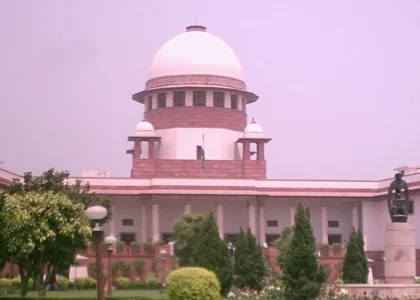
The constitutional validity of these amendments is currently under consideration before the Supreme Court of India. The Court’s decision will play a crucial role in determining whether privacy and transparency can continue to coexist as complementary rights, or whether one will prevail at the expense of the other.
Footnotes
- State of Uttar Pradesh v. Raj Narain, (1975) 4 SCC 428.
- INDIA CONST. art. 21.
- State of Uttar Pradesh v. Raj Narain, (1975) 4 SCC 428.
- Maneka Gandhi v. Union of India, (1978) 1 SCC 248.
- Justice K.S. Puttaswamy (Retd.) v. Union of India, (2017) 10 SCC 1.
- People’s Union for Civil Liberties v. Union of India, (1997) 1 SCC 301.
- Thalappalam Serv. Coop. Bank Ltd. v. State of Kerala, (2013) 16 SCC 82.
- Justice K.S. Puttaswamy (Retd.) v. Union of India, (2017) 10 SCC 1.
- Girish Ramchandra Deshpande v. CIC, (2013) 1 SCC 212.
- R.K. Jain v. Union of India, (2013) 14 SCC 794.
- Arvind Kejriwal v. CIC, 2010 SCC OnLine Del 2160.
- Union of India v. Ass’n for Democratic Reforms, (2002) 5 SCC 294.
Bujagouni Rakshitha
Tamilnadu National law University
3rd year, Ballb(hons)