
Case Name: ABDUR RAHMAN V. UNION OF INDIA & ORS
Petition Number: Civil Appeal 2026 @ SLP(C) No. 21390 of 2024
Neutral Citation: 2026 INSC 550
Date of Judgment: 26.05.26
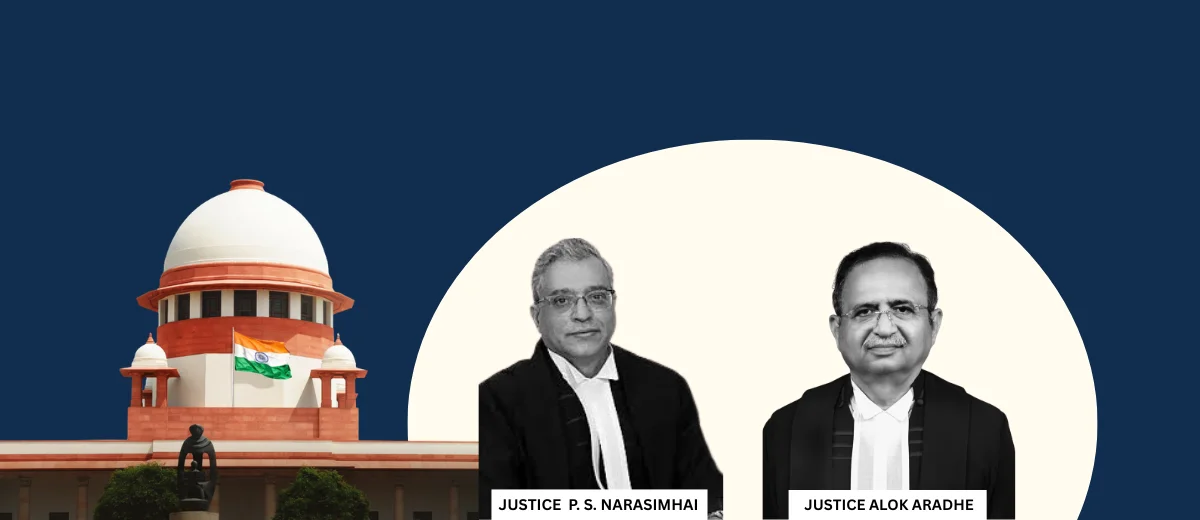
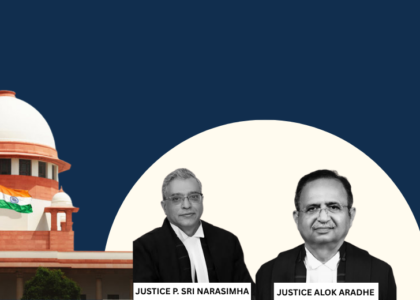
Coram: HON’BLE MR. JUSTICE PAMIDIGHANTAM SRI NARASIMHA & HON’BLE MR. JUSTICE ALOK ARADHE
INTRODUCTION
The present appeal centered around the rejection of an IPS officer’s request for voluntary retirement under Rule 16(2A) of the All India Services (Death-cum-Retirement Benefits) Rules, 1958. The principal issue was whether the Central Government validly exercised its discretion in refusing the request on the ground that disciplinary proceedings were pending or contemplated. The Supreme Court held that the rejection order suffered from non-application of mind, set it aside, and directed fresh consideration of the appellant’s VRS application.
FACTS AND PROCEDURAL HISTORY
The appeal arose from the rejection of an IPS officer’s request for voluntary retirement under Rule 16(2A) of the All India Services (Death-cum-Retirement Benefits) Rules, 1958. The appellant, a 1997-batch Maharashtra cadre officer, submitted a VRS notice on 1 August 2019 while three complaints against him were pending: allegations of harassment and bigamy, and an inquiry concerning a speech delivered at a book launch. Although the Maharashtra Government, by letter dated 16 October 2019, recommended acceptance of the request on the ground that no major penalty was likely to result, the Central Government rejected the application on 25 October 2019, holding that disciplinary proceedings were pending or contemplated and that the officer was not clear from the vigilance angle. Subsequently, three charge-sheets were issued between 2020 and 2022, including charges relating to contracting a second marriage during the subsistence of the first, misconduct connected with his public speech, and conduct after filing the VRS application. The Central Administrative Tribunal dismissed the appellant’s challenge, holding that the pending complaints were under active contemplation and could potentially result in major penalties. The High Court affirmed this view, ruling that the Central Government is the final authority empowered to decide whether to accept a notice of voluntary retirement. It held that “acceptance” under Rule 16(2A) requires an independent application of mind and is not a ministerial act. Since disciplinary proceedings were contemplated on the date of the VRS request, the Central Government’s refusal to accept the notice was held to be lawful and within its statutory authority, leading to the present appeal.
ISSUES
1. Whether, under Rule 16(2A) of the All India Services (Death-cum-Retirement Benefits) Rules, 1958 read with Guideline 3(ii) of the DoPT Guidelines, the Central Government can reject an IPS officer’s request for voluntary retirement solely on the basis of pending complaints or contemplated disciplinary proceedings?
2. Whether the rejection of the appellant’s VRS application was vitiated by non-application of mind when no disciplinary proceedings were pending and there was insufficient material to conclude that proceedings warranting a major penalty were genuinely contemplated?
SUBMISSIONS OF THE PARTIES
The appellant argued that he should be permitted to retire voluntarily, even subject to pending disciplinary proceedings. He contended that the State Government’s opinion that no major penalty was likely was binding on the Centre, that no disciplinary proceedings were genuinely “contemplated” when he applied for VRS, and that the Central Government’s rejection reflected non-application of mind.
Per Contra, the Union and State Governments argued that the Central Government alone is competent to impose major penalties on IPS officers and therefore has independent discretion to reject VRS. They maintained that contemplated proceedings existed when the application was considered, making the appellant ineligible for VRS, and distinguished the precedential authority relied upon by the appellant.
JUDGMENT AND ANALYSIS
The Supreme Court at the outset examined the scope of the Central Government’s power under Rule 16(2A) of the All India Services (Death-cum-Retirement Benefits) Rules, 1958 and Guideline 3(ii) of the DoPT Guidelines governing voluntary retirement of All India Service officers. The Court held that a notice seeking voluntary retirement becomes effective only upon acceptance by the Central Government. The power of acceptance is not a ministerial formality but requires an independent and informed exercise of discretion. While the State Government’s opinion carries persuasive value because of its supervisory role, the Central Government is not bound by it and has the final authority to accept or reject a request for voluntary retirement.
Interpreting Guideline 3(ii), the Court observed that rejection of voluntary retirement may ordinarily be justified only where disciplinary proceedings are pending or genuinely contemplated and where such proceedings may warrant a major penalty such as dismissal or removal. A disciplinary proceeding can be regarded as pending only upon issuance of a formal chargesheet. Since no chargesheet had been served on the appellant when the Central Government rejected his VRS application on 25 October 2019, no disciplinary proceedings were pending on that date.
The Court further examined whether proceedings were “contemplated.” It found that two of the three complaints relied upon by the Government were either dormant or withdrawn long before the impugned decision. Only the inquiry relating to the appellant’s speech at a book launch could arguably be considered under contemplation. Moreover, the State Government had expressly opined that the matter was unlikely to result in a major penalty. The Central Government failed to engage with this assessment and mechanically concluded that the appellant was not clear from the vigilance angle. Consequently, the rejection order suffered from non-application of mind.
The Court also took note of subsequent developments, including prolonged and unexplained delays in issuing chargesheets and conducting disciplinary proceedings. The Court relied on the principles laid down in State of Andhra Pradesh v. N. Radhakishan [(1998) 4 SCC 154], to observe that such delay causes serious prejudice to the officer and reflects administrative indifference. Accordingly, the Court allowed the appeal, set aside the Central Government’s order dated 25 October 2019 and the High Court’s judgment, and directed the Ministry of Home Affairs to reconsider the appellant’s VRS application afresh within three months, taking into account all relevant facts and subsequent developments.
CONCLUSION
The Supreme Court clarified that acceptance of voluntary retirement under Rule 16(2A) requires an independent decision by the Central Government, though such discretion must be exercised on relevant material. Since no disciplinary proceedings were pending when the appellant sought retirement, and the alleged contemplated proceedings lacked sufficient basis to justify rejection, the impugned order was found unsustainable. Accordingly, the Court allowed the appeal, quashed the rejection order, and directed reconsideration of the VRS request within three months.


 > Mon - Sat, 9:00 AM – 7:30 PM