
Case Name: MANIYAR ILIYAZ @ SHAIK RIYAZ & ANR. V. P. AYYAPPAN & ORS.
Petition No.: Civil Appeal No. 8388 OF 2026 (@ SLP (C) No. 7570 OF 2024)
Neutral Citation: 2026 INSC 647
Date of Judgement: 19.06.2026
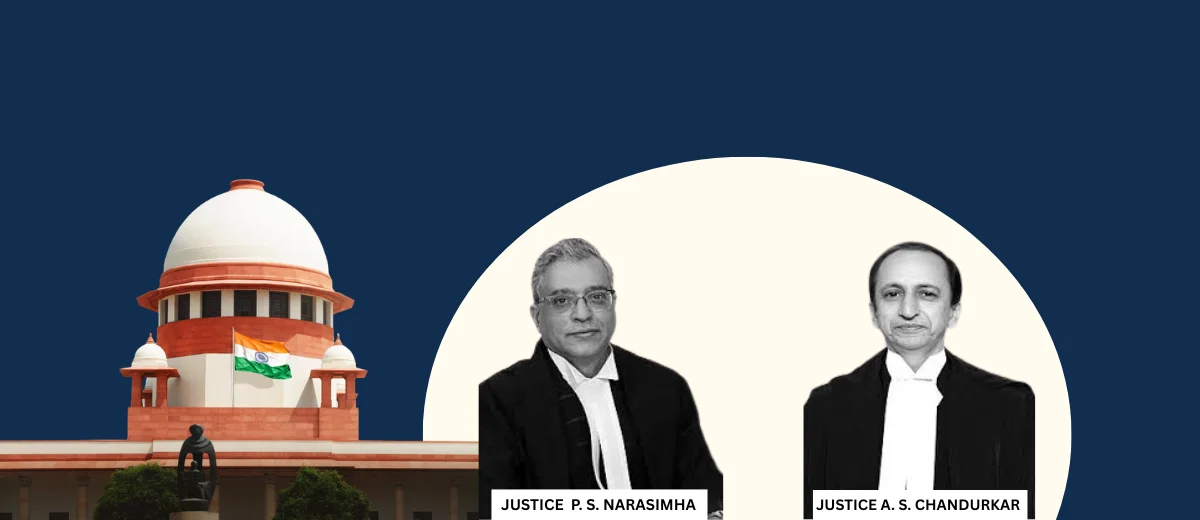
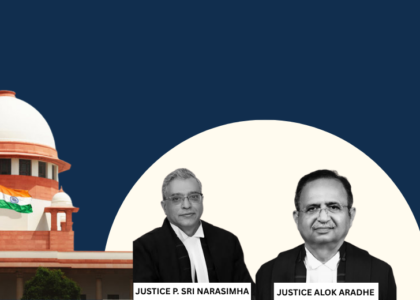
Coram: Hon’ble Mr. Justice Pamidighantam Sri Narasimha & Hon’ble Mr. Justice Atul S. Chandurkar
Relevant Statutes & Provisions: Articles 19(1)(a), 19(1)(b), 19(1)(c), 19(1)(d), 21 and 32 of the Constitution of India; Sections 38–40 of the Specific Relief Act, 1963; and the Motor Vehicles Act, 1988 read with Regulations 2(o), 3, 5 and 9 of the Motor Vehicles (Driving) Regulations, 2017.
INTRODUCTION
The Supreme Court of India, in a landmark judgment, transformed a motor accident compensation dispute into a significant constitutional discourse on pedestrian rights and urban mobility. Arising from the death of a five-year-old child in a road accident, the Court held that the right to walk safely on demarcated footpaths forms an integral part of the freedoms guaranteed under Part III of the Constitution. Emphasising that mobility, dignity, and personal liberty are inseparable, the Court recognised a fundamental right to safe pedestrian infrastructure and imposed corresponding obligations on public authorities to ensure its provision and maintenance.
FACTS
The case arose from a tragic road accident in which a five-year-old child was fatally struck by a tanker while walking to school with his father. The accident occurred on a public road that lacked both a footpath and a pedestrian crossing. Following the child’s death, the father filed a Claim Petition before the Motor Accident Claims Tribunal (hereinafter referred as “MACT”), seeking compensation of Rs. 25,00,000 and The MACT awarded Rs. 7,82,000 with interest at the rate of 6% p.a. from the date of petition till realisation. The appellant as well as the Insurance Company filed an appeal by the order impugned before us, the High Court dismissed the appellant’s appeal and, while allowing the respondent’s appeal reduced the compensation to Rs. 4,70,000/-. Aggrieved by the reduction, the father approached the Supreme Court, which examined not only the compensation claim but also the broader constitutional implications of pedestrian safety and access to public roads.
ISSUES
The principal issues before the Court were:
- Whether the constitutional guarantee of freedom of movement under Article 19(1)(d), read with Article 21 of the Indian Constitution encompasses a fundamental right of pedestrians to walk safely on demarcated footpaths?
- Whether public authorities bear a corresponding constitutional and statutory obligation to create, maintain, and protect such infrastructure?
ARGUMENTS OF THE PARTIES
The appellant contended that the High Court erred in reducing the compensation awarded by the Motor Accident Claims Tribunal for the death of his five-year-old son. Relying on recent Supreme Court precedents concerning compensation for deceased minors, he argued that the award failed to reflect the loss suffered by the family and sought enhancement of compensation. The appellant also highlighted the circumstances of the accident, emphasising the absence of a footpath and pedestrian crossing at the site. The respondents supported the High Court’s approach and challenged the quantum of compensation claimed. They argued that the compensation should be assessed strictly in accordance with settled principles governing motor accident claims.
JUDGEMENT AND ANALYSIS
The Supreme Court allowed the appeal and held that the High Court erred in reducing the compensation awarded by the Motor Accident Claims Tribunal (MACT) for the death of a five-year-old child. Relying on Karuna Parmar v. Prakash Sinha (2025) INSC 1244 , the Court reiterated that compensation in cases involving deceased minors must be determined through an objective methodology based on minimum wages, future prospects, and the multiplier principle, rather than speculative assumptions regarding future earning capacity. Applying these principles, the Court enhanced the compensation to ₹11,44,628, reaffirming that the standard of “just compensation” under the Motor Vehicles Act, 1988 requires consistency, fairness, and adequate recognition of the loss suffered by the claimants.
The court held that whenever a public road exists, there is a corresponding legal obligation on the State and local authorities to provide and maintain demarcated footpaths for pedestrians. The Court declared that this obligation is enforceable in law and that the fundamental right to walk on demarcated footpaths takes precedence over the privilege of movement by motorised vehicles. This transformed pedestrian infrastructure from a matter of mere administrative discretion into a constitutional obligation.
The Court emphasised that the effective enforcement of the fundamental right to walk on demarcated footpaths requires the establishment of an independent regulatory body. Such a regulator, vested with perpetual succession, would develop and preserve institutional memory by relying on the experience, data, and information accumulated over time. The Court further observed that institutional expertise is essential, and therefore the regulatory body should be staffed with professionals possessing specialised knowledge and domain expertise. To ensure institutional integrity, the regulator must function independently and make objective decisions free from governmental or commercial influence. The Court concluded that these objectives can only be achieved through a framework founded on transparency, accountability, and institutional independence, thereby ensuring the meaningful realisation of the fundamental right to walk.
In its concluding directions, the Supreme Court formally declared that the right to walk is a fundamental right under Part III of the Constitution. The Court held that this right is an integral facet of the freedoms guaranteed under Articles 19(1)(d), 19(1)(a), 19(1)(b), 19(1)(c), and Article 21, and necessarily includes the right to safe and demarcated footpaths. It further held that this right enjoys priority over the movement of motorised vehicles. The Court further recognised that the fundamental right to walk on demarcated footpaths has a correlative duty. If the road exists, there is a duty to ensure that there are demarcated and well-maintained footpaths for walkers. The Court categorically held that the urban development authorities, municipal corporations, municipalities and even panchayats, being the duty bearers, must endeavour to demarcate, construct, maintain, and safeguard footpaths and other necessary pedestrian infrastructure, as walking is integral to life.
Finally, the Court held that any violation of the fundamental right to walk on demarcated footpaths entitles citizens to seek constitutional and legal remedies, including restitution and compensation, against the responsible public authorities. The Court clarified that these remedies are independent of and in addition to any compensation available under the Motor Vehicle Act 1988, thereby reinforcing the constitutional protection afforded to pedestrians.
CONCLUSION
The Supreme Court’s ruling in Maniyar Iliyaz @ Shaik Riyaz v. P. Ayyappan is a landmark affirmation of pedestrian rights within India’s constitutional framework. By recognising the right to walk on safe and demarcated footpaths as an integral component of Articles 19 and 21, the Court expanded the scope of fundamental rights beyond traditional conceptions of mobility. Equally significant is its recognition of the State’s positive obligation to create and maintain pedestrian infrastructure and the availability of constitutional remedies for its breach. The judgment reorients public law towards a citizen-centric vision of urban governance, accessibility, dignity, and equitable use of public spaces.



 > Mon - Sat, 9:00 AM – 7:30 PM