
Date: 16/03/2026
Case Name: UNION OF INDIA & OTHERS VS. ROHITH NATHAN & ANOTHER
Petition Number: Civil Appeal Nos. 2827-2829 of 2018 (with connected matters)
Citation: 2026 INSC 230
Date of Judgement: 11.03.2026
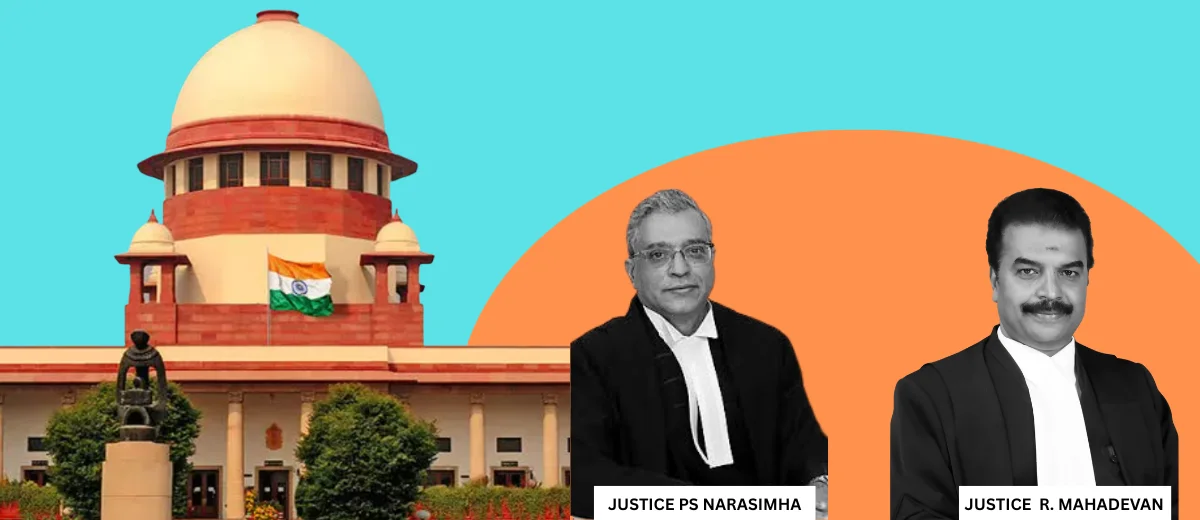
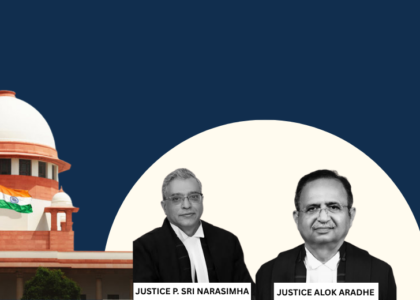
Coram: HON’BLE MR. JUSTICE PAMIDIGHANTAM SRI NARASIMHA & HON’BLE MR. JUSTICE R. MAHADEVAN
BACKGROUND:
This case involves a dispute over the eligibility of candidates for the Civil Services Examination under the Other Backward Classes (OBC) category. The concept of creamy layer was developed mainly to ensure that the benefits of reservation reach the disadvantaged members of backward classes and not those who have already achieved social and economic advancement. The problem started when certain candidates claimed the benefit of OBC reservation but the government claimed that they belong to the “creamy layer” based on their parents’ income. The main conflict was whether the high salaries of parents working in Public Sector Undertakings (PSUs) or private sectors could be used to disqualify their children even though the same rule does not apply to children of Government employees in similar ranks.
FACTS:
The first case involved Rohith Nathan who secured AIR 174 in the Civil Services Examination 2012 under the OBC category. His father worked in HCL Technologies and earned a salary exceeding the income limit prescribed for determining creamy layer status. Based on this, he was denied the reservation benefits. Similarly, another candidate named G. Babu appeared for the same examination in 2013. His father was a Senior Executive Engineer in a PSU. The government denied him reservation benefits based on his father’s salary.
The controversy was mainly around the interpretation of government policies governing the determination of creamy layer status. An Office Memorandum (OM) dated 8th September 1993 which provided that the income test for determining creamy layer status among OBCs would exclude income derived from salary and agricultural land. The Department of Personnel and Training (DoPT) later issued a clarificatory letter dated 14 October 2004 which stated that for employees working in PSUs, banks, and similar institutions where equivalence with government posts had not been established, salary income could be considered while applying the income test. Based on this, the children of PSU and private sector employees were being denied reservation benefits.
The affected candidates challenged this before the Central Administrative Tribunal. The decision was in their favour and the government was directed to reconsider their cases. The Union of India challenged this decision before the Madras High Court which upheld the CAT’s ruling. The High Court stated that this interpretation is resulting in unfair discrimination. Similar disputes arose in different parts of the countries and the candidates approached the High Courts of their respective jurisdictions. The decisions were in favour of the candidates. Aggrieved by these judgements, the Union of India approached the Supreme Court.
ISSUES:
- Whether the clarificatory letter could override the Office Memorandum regarding the determination of creamy layer status?
- Whether the salary of parents employed in PSUs or private sectors should be considered as the only factor while determining the creamy layer status?
- Whether this interpretation resulted in discrimination and violation of Article 14 of the Constitution?
ARGUMENTS OF THE PARTIES:
Petitioners:
The appellants argued that allowing economically advanced individuals to get the reservation benefits would defeat the very purpose of the creamy layer rule. They relied on the Indra Sawhney case where the Supreme Court held that advanced individuals among backward classes must be excluded from the benefits.
Since the equivalence between PSU posts and government posts has not yet been determined, the income test under the OM should apply. It was also clarified that the 2004 letter simply clarified the procedure for application of the income test and did not change the policy itself.
Respondents:
The respondents argued that the OM excluded salary from the income test. The 2004 letter introduced a new rule that was inconsistent with the original memorandum and had no authority to override it. It was contended that the government’s interpretation resulted in discrimination and unfair treatment between similarly placed employees. Children of government employees were not treated as creamy layer even when their parents earned high salaries, whereas children of PSU employees were denied reservation benefits for the same.
They further argued that OBC Non-Creamy Layer certificates were issued by the authorities after proper verification and the same cannot be arbitrarily disregarded by the government.
JUDGEMENT AND ANALYSIS:
The Supreme Court held that the OM constitutes the main framework for determining creamy layer status. A clarificatory letter cannot override or alter its provisions. When administrative authorities try to alter established policies through informal clarifications, it can lead to confusion and arbitrary actions.
It was held that when the 1993 OM and the clarificatory letter are read together, it becomes clear that salary cannot be used as the sole factor to determine creamy layer status. The status and category held by the parents remain an important factor. The concept of exclusion is status-based and not purely income-based which reflects the understanding that advancement within the service hierarchy indicates social progress regardless of changes in salary levels. Therefore, creamy layer status cannot be determined on the basis of income only. The 21st Report of the Parliamentary Committee on Welfare of Other Backward Classes (2018-19) was also referred to by the Court to clarify that the 2004 letter had created more confusion instead of giving clarity. Excluding individuals from reservation benefits based on that would not align with the original framework and intention of the 1993 OM.
The Court observed that treating children of similarly placed employees from different sectors is resulting in unreasonable classification. This is a blatant violation of Articles 14 and 16 of the Constitution. By using that interpretation, the government ignored the social advancement factor. The Court affirmed that salary and agricultural income must be excluded from the income test for determination of creamy layer. The government was ordered to reconsider the candidates’ claims within six months and create extra posts to accommodate those who were being wrongly excluded.
CONCLUSION:
The judgement clarifies that “income” is only a surrogate measure for social advancement and cannot replace the primary rank-based criteria. It provides a massive relief to OBC candidates whose parents are in the service sector (PSUs/Banks/Private) by ensuring that they are not unfairly penalised for salary increments or promotions that do not change their fundamental social standing.
Contributed by:- Krishti Chakraborty (5th Year)
AMITY LAW SCHOOL, NOIDA


 > Mon - Sat, 9:00 AM – 7:30 PM