
Case Name: M/S MARG LIMITED V. SUSHIL LALWANI & ORS
Petition Number: SLP(C) NO. 25132 OF 2025
Neutral Citation: 2026 INSC 402
Date of Judgment: 21.04.2026
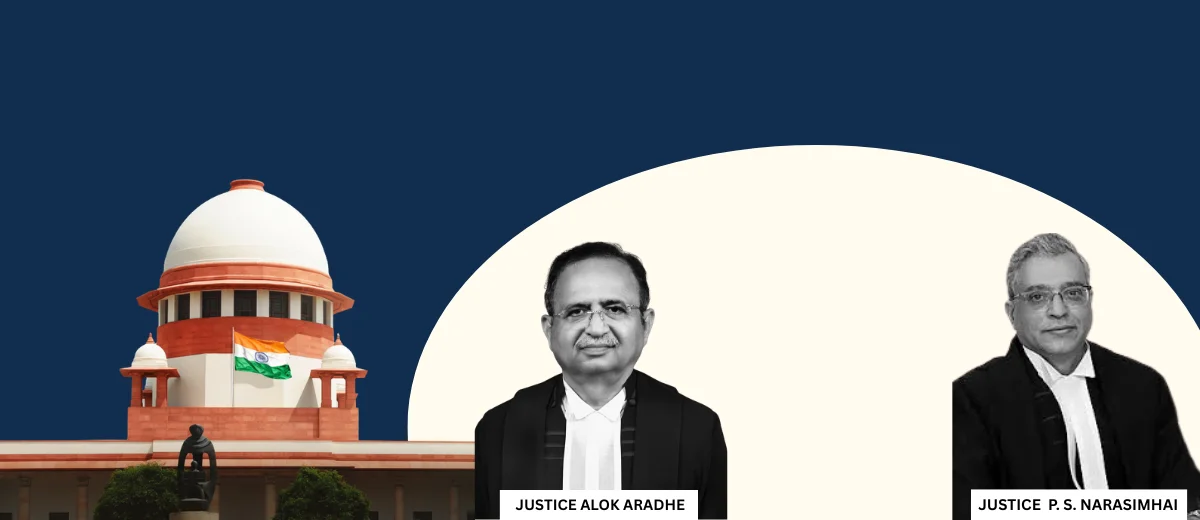
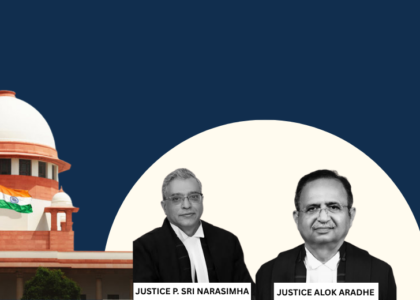
Coram: HON’BLE JUSTICE MR. PAMIDIGHANTAM SRI NARASIMHA & HON’BLE MR. JUSTICE ALOK ARADHE
Relevant Provisions: Order 7 Rule 11 of the Code of Civil Procedure, 1908
INTRODUCTION
The present appeal before the Supreme Court arose from the rejection of a plaint under Order VII Rule 11 CPC by the High Court in a dispute concerning a complex commercial real estate transaction. The primary questions were whether the plaint could be rejected on the ground that an unsigned MoA was unenforceable and that no subsisting cause of action survived after execution of sale deeds, and whether alleged deficiency in court fees warranted rejection without opportunity to cure. The Supreme Court held that the High Court exceeded the limited scope of Order VII Rule 11 CPC by undertaking a premature examination of disputed questions relating to enforceability of the MoA and extinguishment of rights. It further held that the plaint disclosed a clear triable cause of action and that any deficiency in court fees was curable and could not justify rejection without affording opportunity to rectify defect.
FACTS
The appeal arose from an order passed by the High Court of Judicature at Madras, whereby the High Court allowed the respondents’ revision petition and rejected the appellant’s plaint under Order VII Rule 11 of the Code of Civil Procedure. The appellant company had purchased land at Karapakkam Village, Chennai and developed a commercial IT building. The appellant created equitable mortgages over the subject property in favour of Standard Chartered Bank to secure loans. Following defaults, the loan account was classified as an NPA and proceedings under the SARFAESI Act were initiated. After failed settlement attempts with the Bank, the appellant negotiated with the respondents for sale of the property through a Memorandum of Agreement (MoA). Although the appellant executed the MoA, the respondents did not sign it. Subsequently, upon payment of Rs.32.50 crores to the Bank, eight sale deeds were executed and registered in favour of the respondents in April 2023. In 2024, the appellant instituted a suit seeking execution of the MoA, or alternatively reconveyance of the property and injunctive reliefs.
The respondents sought rejection of the plaint under Order VII Rule 11 CPC, contending that it disclosed no cause of action and was insufficiently stamped. While the trial court dismissed the application holding that triable issues existed, the High Court in revision held that the unsigned MoA was not an enforceable contract and that execution of the registered sale deeds extinguished any surviving cause of action. It further held that the suit was essentially a monetary claim requiring ad valorem court fees. Accordingly, the High Court set aside the trial court’s order and rejected the plaint, leading to the present appeal.
ARGUMENTS OF THE PARTIES
The appellant contended that the transaction was a composite commercial arrangement involving both execution of sale deeds and payment of the remaining consideration under the MoA. Though unsigned, the MoA was finalized and acted upon through negotiations, WhatsApp exchanges, SPV incorporation, and sale deeds. In the light of this finalization they argued that the High Court wrongly held that the plaint disclosed no cause of action, and impermissibly undertook a detailed examination of facts, amounting to a mini-trial at the stage of Order VII Rule. With regards to court fees, they submitted that if there was a deficiency in payment, it was a curable defect, and therefore the impugned order was liable to be set aside.
Per contra, the respondents argued that the transaction concluded upon execution of the registered sale deeds, extinguishing all surviving rights of the appellant. Since the MoA was unsigned, it was unenforceable in law. They further contended that the suit was essentially a money recovery claim requiring ad valorem court fees and disclosed no valid cause of action, and therefore, the High Court was right in rejecting the plaint.
ISSUES
1. Whether the High Court was justified in rejecting the plaint under Order VII Rule 11 CPC on the ground that the unsigned MoA was unenforceable and that no subsisting cause of action survived after execution of the sale deeds?
- Whether the plaint could be rejected for alleged deficiency in court fees without affording the plaintiff an opportunity to cure the defect in accordance with Order VII Rule 11(b) and (c) CPC?
JUDGMENT AND ANALYSIS
The Court held that the High Court exceeded the limited scope of Order VII Rule 11 CPC by undertaking a premature examination of the enforceability of the MoA. At the outset, the court reiterated the settled principle that, at the stage of rejection of a plaint, courts must assume the averments in the plaint to be true. The Court emphasized that disputed questions regarding validity, enforceability, and intention of parties can only be adjudicated at trial.
The Court observed that a plaint generally discloses material facts establishing a subsisting dispute and a triable cause of action. In the present case, the pleadings set out a negotiated commercial understanding intended to be formalised through an MoA, drafted by the defendants’ counsel, with negotiations evidenced through communications. They further alleged a composite transaction involving unpaid consideration of Rs. 53 crores and non-execution of the MoA, along with acts of partial performance and breach. Read holistically, these averments did disclose a clear cause of action warranting trial. In the light of these findings, the Court held that the High Court impermissibly conducted a ‘mini-trial’ by concluding that the unsigned MoA was unenforceable and that no surviving cause of action existed after execution of the sale deeds.
With respect to deficiency of court fees, the court observed that a plain and conjoint reading of clauses (b) and (c) of Order VII Rule 11 CPC makes it clear that rejection of a plaint cannot be ordered at the threshold. The Court must first determine undervaluation or insufficiency of court fee and then, in the second step, grant the plaintiff an opportunity to correct the valuation and make good the deficit within a time fixed. Only upon non-compliance can rejection follow. In the present case, the plaint was rejected outright without affording such opportunity or determining proper valuation, which is contrary to the statutory mandate. The defect being curable, the impugned order was set aside by the Court and the trial court was directed to permit rectification and payment of requisite court fee.
CONCLUSION
The Supreme Court set aside the High Court’s order and restored the plaint, holding that the rejection under Order VII Rule 11 CPC was legally unsustainable. It reasoned that the High Court had impermissibly conducted a mini-trial by examining the enforceability of the unsigned MoA and by assuming extinction of rights upon execution of sale deeds. The Court reaffirmed that plaint averments must be taken as true at this stage and that triable issues clearly emerged, warranting adjudication on evidence at trial.



 > Mon - Sat, 9:00 AM – 7:30 PM