Case Name: Ashwini Kumar Upadhyaya v. Union of India
Petition Number: W.P.(C)No.943 of 2021
Neutral Citation:
Date of Judgement: 29th April, 2026
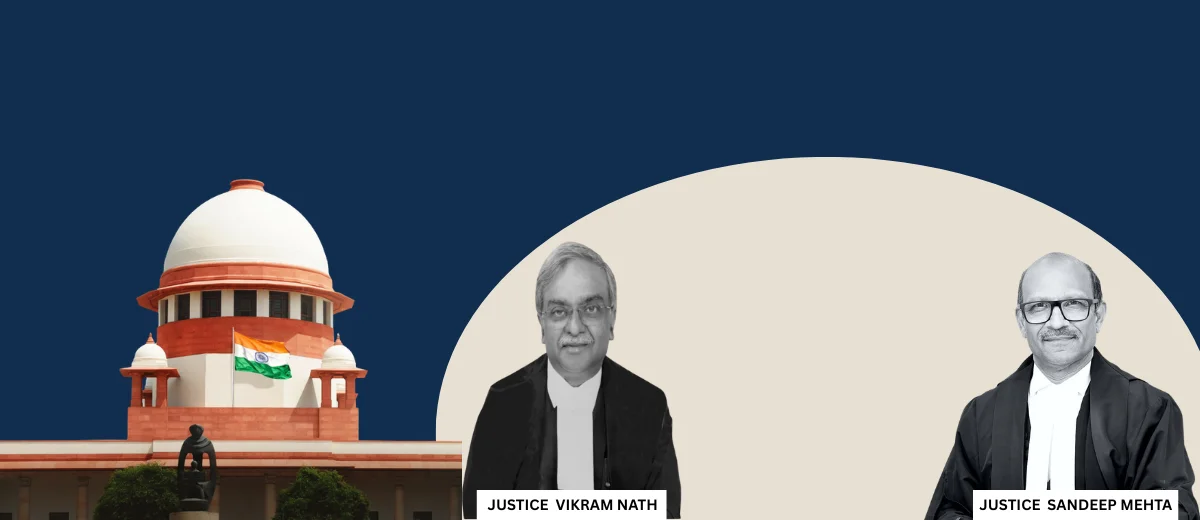
Coram: Honourable Justice Vikram Nath and Justice Sandeep Mehta
INTRODUCTION
This matter comprises multiple writ petitions filed under Article 32 of the Constitution of India, as well as special leave and contempt petitions. The lead writ petition is W.P. (C) No. 943 of 2021 filed by Ashwini Kumar Upadhyay. The petitioners sought directions to the Union of India to examine the existing legal framework governing hate speech and rumour-mongering, and to take steps to effectively regulate it by legislation. The proceedings were triggered by the 267th Report of the Law Commission of India (2017) recommending amendments to criminal law regarding incitement to hatred, and by public speeches during the COVID-19 pandemic, allegedly targeting religious minorities.
FACTS
The petitioners, from various parts of the country, filed 13 writ petitions seeking reliefs including: direction to the Centre to implement the Law Commission’s 267th Report, direction to stop dissemination of fake news and communally biased media content; direction to lodge criminal cases against persons committing violence against minorities; constitution of special investigation teams; and issuance of a continuing mandamus to ensure registration of FIRs in hate speech cases. Some petitions pertained to specific incidents, such as speeches during the Tablighi Jamaat event at Nizamuddin Markaz, a programme titled “Bindas Bol” on Sudarshan News, and various alleged hate speeches by public functionaries across different States.
Additionally, SLP (Criminal) No. 5107 of 2023 was filed against the Delhi High Court’s judgment, which held that prior sanction under Section 196 CrPC was required before a Magistrate could direct registration of FIR under Section 156(3) CrPC for offences like Sections 153A, 295A, 505 IPC. Several contempt petitions were also filed alleging violation of this Court’s interim orders dated 21.10.2022 and 28.04.2023, which directed authorities to take suo motu action.
ISSUES
- Whether the Court can create or expand criminal offences in the absence of legislative action?
- Whether the existing field of substantive criminal law adequately deals with offences relating to hate speech, or the field is legislatively unoccupied?
- Whether the existing framework of criminal procedural law provides adequate and efficacious remedies to address grievances, particularly in cases of non-registration of FIRs?
- Whether a continuing mandamus is warranted in the present case?
- Whether prior sanction is a precondition for directing registration of FIR and investigation under Section 156(3) CrPC.
ARGUMENTS OF THE PARTIES
Petitioners and Amicus Curiae: submitted that the State’s failure to respond to systematic hate speech may violate Article 21. The statutory framework is reactive, not preventive; penalties are insufficient deterrents; there is no comprehensive definition of hate speech; and there is institutional inertia in registering FIRs. They relied on the Law Commission’s 267th Report and sought a continuing mandamus for judicial oversight.
Respondent (Union of India): submitted that invoking Article 32 without exhausting statutory remedies should be discouraged, as the reliefs fall within legislative policy; the judiciary cannot trench upon the legislative domain. The Election Commission submitted that existing provisions (Sections 153A, 295A, 505 IPC, and Sections 8, 123(3A), 125 of the Representation of the People Act, 1951) are adequate, and the Model Code of Conduct applies during elections. Respondents in the criminal appeal argued that a prior sanction under Section 196 CrPC is mandatory before taking cognisance, and that ordering an investigation under Section 156(3) amounts to taking cognisance, hence a sanction is required.
JUDICIAL REASONING
The Supreme Court structured its judgment into four parts.
On Issue I, the Court held that the doctrine of separation of powers, though not rigidly followed in India, functionally demarcates the roles of the legislature, executive and judiciary. Relying on Kesavananda Bharati (1973) 4 SCC 225, Asif Hameed v. State of J&K 1989 Supp (2) SCC 364, SCWLA v. Union of India (2016) 3 SCC 680 and Ashwini Kumar v. Union of India W.P.(C)No.943 of 2021, the Court observed that the judiciary cannot create or expand criminal offences or prescribe punishments in the absence of legislative sanction. In SCWLA, the Court refused to introduce chemical castration as punishment, stating that courts neither create offences nor legislate punishments. The Vishaka v. State of Rajasthan, (1997) 6 SCC 241 principle applies only where there is constitutional silence or a legislative vacuum. Here, the field is occupied.
On Issue II, the Court found that the existing substantive criminal law is not unoccupied. It referred to Sections 124A, 153A, 153B, 295A, 298, 505 IPC, besides provisions in the Representation of the People Act, 1951, Protection of Civil Rights Act, 1955, Religious Institutions (Prevention of Misuse) Act, 1988, Cable Television Networks Regulation Act, 1995, and Criminal Procedure Code (Sections 95, 107, 144). The Law Commission’s 267th Report acknowledged the existence of these provisions and recommended strengthening them, but the Court held that the difficulty lies in enforcement, not in the absence of law.
In Issue III, the Court examined the scheme of the CrPC (now the BNSS). Relying on Lalita Kumari v. Government of Uttar Pradesh & Ors, (2014) 2 SCC 1 (mandatory registration of FIR upon disclosure of cognizable offence) and Sakiri Vasu v. State of U.P. (2008) 2 SCC 409 (remedies under Sections 154(3) and 156(3) CrPC before approaching High Court). The court has emphasised that the Constitutional remedies under Articles 32 and 226 are extraordinary and should not bypass these statutory remedies.
On Issue IV, the Court declined to issue continuing mandamus, holding that such a course would require the Court to keep matters pending in anticipation of future contingencies, which is not contemplated by law. It would amount to micro-management of executive functions and disturb the balance of the statutory framework. Relying on Union of India v. S.B. Vohra (2004) 2 SCC 150, Lok Prahari v. Union of India (2021) 15 SCC 80, and the National Federation of Indian Women v. Union of India Writ Petition (Civil) No. 719 of 2023, the Court held that mandamus is issued only where no specific remedy exists and where justice has not been rendered despite being sought. Anticipatory oversight is impermissible.
On issue V, the Court held that an order under Section 156(3) CrPC directing registration of FIR and investigation is at the pre-cognisance stage and does not amount to taking cognisance under Section 190 CrPC. Relying on State of Karnataka v. Pastor P. Raju (2006) 6 SCC 728, Mohd. Yousuf v. Afaq Jahan (2006) 1 SCC 627 and Madhu Bala v. Suresh Kumar (1997) 8 SCC 476, the Court clarified that the requirement of prior sanction under Sections 196 and 197 CrPC operates only at the stage of taking cognisance, not at the stage of investigation. Therefore, the Trial Court and the High Court erred in refusing to direct the registration of an FIR on the ground of the absence of prior sanction. However, on merits, the Court agreed with the High Court that the speeches in question did not disclose a cognizable offence, so the ultimate dismissal was upheld. The criminal appeal was partly allowed only on the basis of a legal principle.
In contempt petitions, the Court found that in some cases, FIRs had already been registered, so those petitions were closed. In others where no complaint was made to authorities, no contempt was made out. In four matters in which specific averments of failure to act despite complaints existed, the Court granted the authorities two weeks to file responses.
In its epilogue on fraternity, the Court made extensive observations on the constitutional value of fraternity under the Preamble, tracing it to Dr B.R. Ambedkar’s speech and the concept of vasudhaiva kutumbakam (the world is one family). It emphasised that hate speech is antithetical to fraternity and that every citizen has a fundamental duty under Article 51A(e) to promote harmony and common brotherhood. However, the Court reiterated that the ultimate safeguard lies in society’s collective constitutional conscience, not merely in legal provisions.
CONCLUSION
The Supreme Court dismissed all the writ petitions and the civil appeal arising out of SLP (Civil) No. 6913 of 2021. The criminal appeal arising out of SLP (Criminal) No. 5107 of 2023 was partly allowed to the extent that the impugned judgment of the Delhi High Court was set aside on the issue of prior sanction, but the dismissal of the complaint on merits was upheld. Certain contempt petitions were closed for compliance or for lack of contempt; others were listed for further response. The Registry was directed to transmit a copy of the judgment to all High Courts for considering practice directions. Pending applications were disposed of.


 > Mon - Sat, 9:00 AM – 7:30 PM