
Case Name: THE STATE OF MAHARASHTRA & OTHERS VERSUS RELIANCE INDUSTRIES LTD. & OTHERS
Petition Number: CIVIL APPEAL NOS. 3012 – 3026 OF 2010; CIVIL APPEAL NOS. 3027 – 3029 OF 2010
Neutral Citation: 2026 INSC 296
Date of Judgement: 25.03.2026
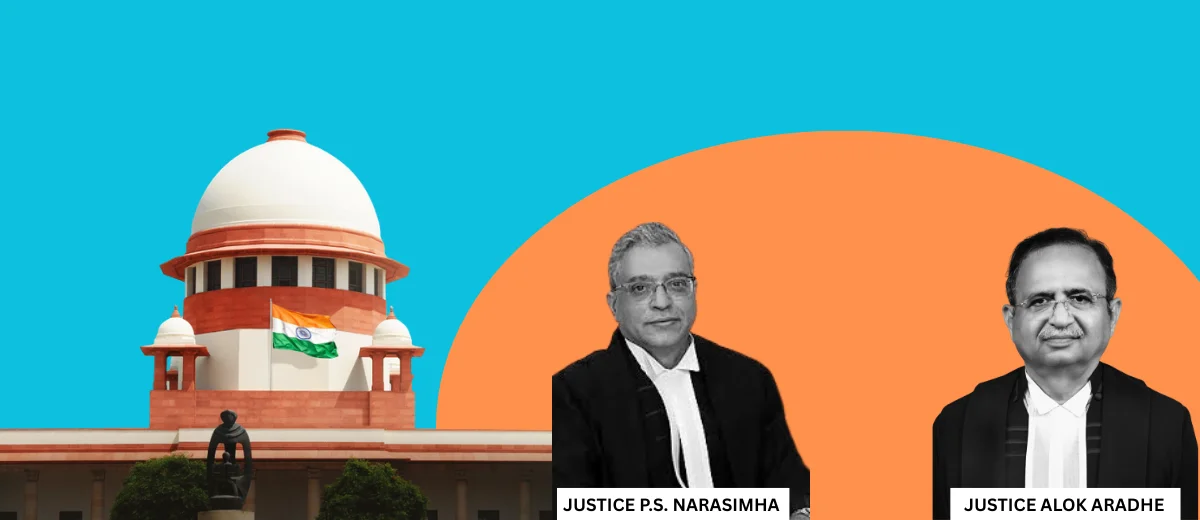
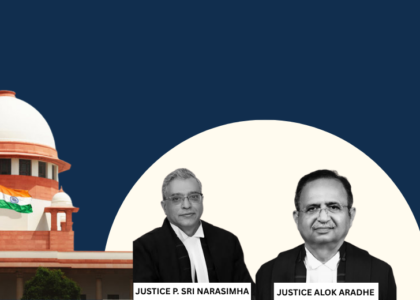
Coram: HON’BLE MR JUSTICE ALOK ARADHE & HON’BLE MR JUSTICE PAMIDIGHANTAM SRI NARASIMHA
INTRODUCTION
The appeals were filed by the State of Maharashtra challenging the judgments of the Bombay High Court, which had struck down State notifications withdrawing an exemption from electricity duty previously granted to captive power generators. The Supreme Court examined the core issue of whether the State, having once granted a statutory exemption from the payment of electricity duty to industries, was legally precluded from withdrawing or modifying such an exemption, and whether such abrupt withdrawal offended the doctrines of promissory estoppel and legitimate expectation.
FACTS
Under Section 5A of the Bombay Electricity Duty Act, 1958, the State Government of Maharashtra granted exemption from electricity duty to industries generating and consuming electricity through captive power plants. This exemption was initially granted in 1994 and subsequently modified by a notification in 1996. However, by notifications dated 01.04.2000 and 04.04.2001, the State withdrew and modified the exemption, later justifying its action on grounds of revenue augmentation and fiscal constraints.
During the pendency of writ petitions challenging these notifications, the State restored the exemption prospectively from May 1, 2005, thereby giving rise to a dispute primarily concerning the levy and recovery of electricity duty for the intervening period between April 2000 and April 2005. The High Court struck down the 2000 and 2001 notifications, holding them to be arbitrary, discriminatory, and vitiated by a lack of application of mind, and rejected the budgetary deficit as a valid ground for withdrawing the concession. Aggrieved, the State preferred an appeal before the Supreme Court.
ISSUES
- Whether the State Government is legally precluded from withdrawing or modifying a statutory tax exemption once granted, and whether such withdrawal is barred by the doctrines of promissory estoppel and legitimate expectation?
- Whether the abrupt withdrawal of the exemption, without affording a transitional period to the beneficiaries, violate the principles of reasonableness and fair play under Article 14 of the Constitution?
ARGUMENTS OF THE PARTIES
The Appellant argued that the power to grant a statutory exemption inherently includes the power to withdraw it. The State contended that augmenting public revenue and addressing fiscal deficits are paramount public interests that override the doctrines of promissory estoppel and legitimate expectation. They emphasized that the captive power producers have no fundamental or statutory right to claim a perpetual tax exemption.
The Respondents argued that, acting on the State’s solemn representations and policies promoting power self-sufficiency, they had made massive capital investments to set up captive power plants. They contended that the sudden, arbitrary withdrawal of the exemption violated Article 14 of the Constitution, arguing that the State was strictly bound by the doctrines of promissory estoppel and legitimate expectation.
JUDGEMENT AND ANALYSIS
The Hon’ble Supreme Court allowed the appeals, quashing the High Court’s judgments, but moulded the final relief in the interest of fairness. The Court first established that an exemption in a fiscal statute is a concession and a defeasible right. Beneficiaries have no legally enforceable right to demand its indefinite continuation. The Court firmly held that the doctrines of promissory estoppel and legitimate expectation cannot bar the State from changing its economic policies if there is a supervening public equity. In this case, addressing budgetary constraints and augmenting state revenue were validated as legitimate public interests, and the Court deferred to the executive’s wisdom in fiscal administration.
However, the Court introduced a critical caveat regarding how such power must be exercised. While the State has the absolute power to withdraw the concession, doing so abruptly violates the principles of fair play and reasonableness. The captive power generators had structured their long-term financial and operational affairs based on the 1994/1996 exemptions. The Court reasoned that an immediate withdrawal placed an undue and sudden fiscal burden on these industries. The Court held that the withdrawal of the exemption was not of such urgency as to dispense with the requirement of providing a reasonable notice period to the affected industries. Because the withdrawal was not a time-sensitive emergency, the State was obligated to provide a reasonable transitional period to allow the industries to reorganise their affairs.
The Court observed that an exemption granted under a fiscal statute constitutes a concession and does not confer any vested or enforceable right, as it remains subject to modification or withdrawal in exercise of the same statutory power. Nonetheless, such exercise of power is amenable to judicial review under Article 14 of the Constitution and must satisfy the test of non-arbitrariness, reasonableness, and absence of discrimination. The Court further held that while the doctrines of promissory estoppel and legitimate expectation are, in principle, applicable against the State, they are not absolute and must give way to overriding considerations of public interest. Where a policy decision to withdraw or modify an exemption is founded on legitimate fiscal considerations, such as revenue augmentation or economic necessity, the State is not precluded from altering its position, provided the decision is neither arbitrary nor vitiated by extraneous considerations.
CONCLUSION
The Supreme Court concluded that while the State retains the sovereign and statutory right to calibrate its fiscal policies and withdraw tax concessions in the public interest, such actions must remain tethered to administrative fairness. The Court held that the State Government possessed the valid statutory power to withdraw or modify the exemption granted under Section 5A of the Act, and such withdrawal was not barred by promissory estoppel. However, to balance the State’s fiscal prerogative with the industries’ right to fair play, the Court held that the withdrawal notifications would only operate after the expiry of a “reasonable notice period” of one year from their respective dates, thereby shielding the respondents from immediate, unmitigated financial shock.



 > Mon - Sat, 9:00 AM – 7:30 PM